
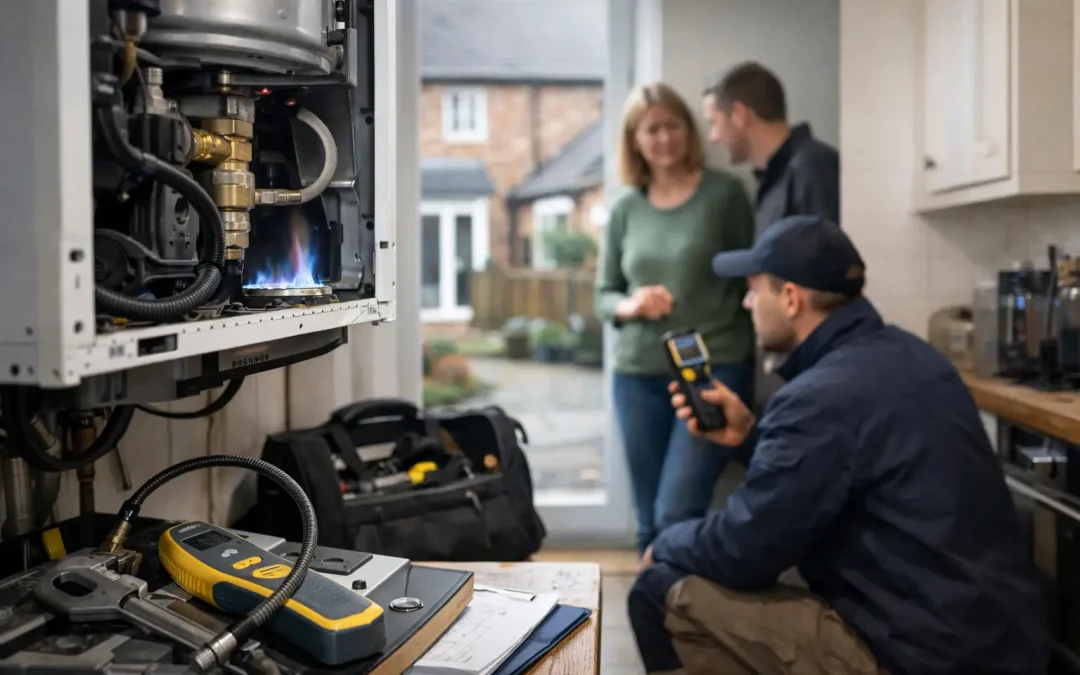
A missed gas safety deadline can quickly become more than an administrative problem. It can delay a tenancy, create risk for occupants and leave a landlord or letting agent dealing with urgent arrangements at the worst possible time. A clear guide to landlord gas compliance helps turn this responsibility into a planned part of rental property maintenance rather than a last-minute scramble.
For landlords across Loughborough, Leicester, Nottingham and the surrounding areas, the practical challenge is often coordination. Properties may be occupied, tenants may have limited availability, and a gas safety inspection may uncover related repair work involving plumbing, ventilation, joinery or general building maintenance. Good compliance depends on having a reliable process for each stage.
What landlord gas compliance involves
In England, landlords must make sure gas appliances, fittings and flues provided for tenants are maintained in a safe condition. This applies to common items such as gas boilers, gas fires and gas hobs. The requirement is not simply to obtain a certificate once a year. It includes ongoing maintenance, safe installation and prompt action where an issue is identified.
A Gas Safe registered engineer must carry out the annual gas safety check. The inspection should take place at least every 12 months for relevant appliances and flues. Following the check, the landlord receives a Landlord Gas Safety Record, often referred to as a CP12 certificate.
Landlords must provide a copy of the record to existing tenants within 28 days of the check. New tenants must receive it before moving in. Records should be retained for at least two years. These requirements apply whether a landlord manages one flat or a larger portfolio.
The annual check is distinct from routine servicing. A gas safety inspection confirms whether an appliance and associated flue are safe at that time. Servicing follows the manufacturer’s instructions and helps keep equipment operating properly. In many rental properties, arranging both at the same visit or during the same period is sensible, but the required frequency can differ depending on the appliance and manufacturer guidance.
The key responsibilities landlords should plan for
A dependable compliance process starts with knowing exactly what is installed at each property. Keep an up-to-date appliance record, including the boiler model, location of gas appliances, service history and the date the next gas safety check is due. This is particularly useful when a property changes hands, a tenant changes, or a new managing agent takes over.
Landlords are responsible for appliances they provide. A tenant’s own gas appliance can create a more complicated situation, but it should not be ignored. The landlord remains responsible for ensuring that the gas installation and flues they supply are safe. Where there is any uncertainty about ownership, installation or connection, seek advice from a suitably qualified Gas Safe registered engineer.
Carbon monoxide alarms are another important part of rental safety. In England, landlords must ensure that a carbon monoxide alarm is fitted in every room used as living accommodation that contains a fixed combustion appliance, excluding gas cookers. The alarm must be in working order at the start of a new tenancy. If a tenant reports that an alarm is faulty, the landlord must repair or replace it as soon as reasonably practicable.
It is also good practice to make responsibilities clear in tenant communications. Tenants should know how to report a suspected gas issue, a boiler fault or an alarm problem without delay. They should also understand that they must allow reasonable access for legally required safety checks, provided appropriate notice is given.
A practical guide to landlord gas compliance
The most effective approach is to work backwards from the renewal date. Do not wait until the certificate has expired. Start contacting tenants well in advance, allowing time for alternative appointment slots, missed access and any remedial work that may be needed.
Book the inspection early
A check can be completed up to two months before the existing record expires while keeping the original anniversary date. This gives landlords useful breathing room. Booking early is especially valuable during busy periods, when tenant schedules, contractor availability and void property works may all need to be coordinated.
Confirm that the engineer is appropriately Gas Safe registered for the type of work required. Gas work should never be treated as a general handyman task or combined with unrelated repairs unless the gas element is being handled by a properly qualified engineer.
Arrange access properly
Access is one of the most common reasons for compliance delays. Give the tenant clear notice, explain the purpose of the visit and offer practical appointment options where possible. Letting agents and property managers should record contact attempts and agreed access arrangements.
If access cannot be gained, keep evidence of the reasonable steps taken. This may include written appointment notices, emails, messages and records of attempted visits. A landlord cannot simply allow a certificate to lapse because a tenant is difficult to reach, but they should not force entry without the proper legal basis or professional advice.
An office-supported maintenance company can reduce the administration involved by communicating with the tenant, coordinating keys where authorised and providing clear booking updates. This is particularly helpful for landlords managing several properties or agents handling a busy portfolio.
Review the record and act on findings
Read the Landlord Gas Safety Record rather than filing it away immediately. Check which appliances were tested, whether any observations were noted and whether further work has been recommended. If an appliance is classified as unsafe, the engineer may disconnect it or advise that it must not be used. Any required remedial work should be dealt with promptly and recorded clearly.
Some issues sit around the gas work rather than within it. A leaking radiator valve, damaged boxing around pipework, poor access to a boiler cupboard, water damage beneath a boiler or a broken extractor can all affect the condition and usability of the property. They may require separate plumbing, joinery, decorating or building repairs once the gas engineer has made the installation safe.
This is where coordinated landlord maintenance is useful. Rather than asking the landlord to chase several trades, one organised point of contact can schedule the related work, keep the tenant informed and provide photographs or completion updates for the property file.
Issue and store the documents
Send the completed record to the tenant within the required timescale and retain a copy securely. Digital records are practical, provided they are legible and can be produced when needed. A simple compliance tracker should show the certificate date, expiry date, appliance details, tenant issue date and any follow-on works.
For letting agents, this tracker should also flag properties where access has not yet been confirmed. Early visibility makes it easier to escalate communication before the deadline becomes urgent.
Common mistakes that create avoidable risk
The first mistake is treating the annual inspection as the only requirement. A certificate does not remove the need to maintain appliances and respond to reported faults during the year. If a tenant reports unusual boiler behaviour, a persistent smell, black marks around an appliance, or a carbon monoxide alarm issue, it needs appropriate attention rather than being held over until the next scheduled check.
The second is assuming that a boiler service automatically covers every legal requirement. Ask the engineer what has been inspected and make sure the correct Landlord Gas Safety Record has been issued where required.
The third is poor record keeping. Missing certificates, unclear appliance ownership and incomplete tenant communications can make a manageable issue difficult to evidence later. Consistent files are particularly valuable during a sale, refinance, insurance query or change of management.
Finally, do not overlook void periods. A vacant property is often the best opportunity to complete gas safety checks, boiler servicing and related repairs without access constraints. It can also be a sensible time to address worn seals, damaged cupboards, ventilation concerns, minor leaks and decorating work before the next tenant moves in.
When gas compliance leads to wider property work
Gas safety work can expose the wider condition of a rental property. A boiler cupboard may need alteration for safe access. A small leak may have damaged plaster. A failed radiator may point to a broader heating issue. In older properties, previous alterations can make access, ventilation and finishing work more involved.
The right response depends on the finding. Some matters require immediate attention from a Gas Safe registered engineer, while others can be planned as routine property repairs. Clear coordination prevents the tenant from receiving conflicting instructions and helps the landlord understand what has been completed, what remains outstanding and who is responsible for each part.
Southdown Group can support this wider process by coordinating rental property repairs and associated maintenance around qualified gas work, with organised scheduling, tenant communication and clear completion information.
A well-run gas compliance process should feel routine to tenants and controlled to landlords. Start early, keep accurate records, use appropriately qualified engineers and deal with related repairs before minor issues become a disruption to the tenancy.