
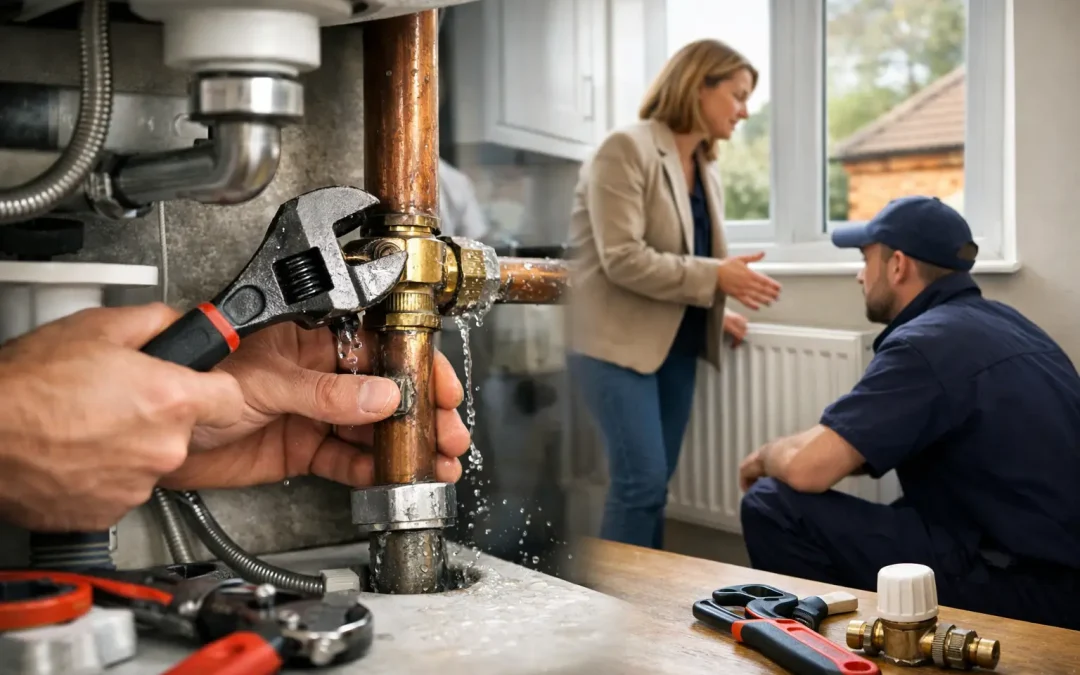
A tenant reports a leak at 8.15am, the landlord wants an update by 9, and another viewing is booked for the afternoon. That is why leak repair for letting agents is rarely just about fixing a pipe. It is about response time, access, communication and making sure a small plumbing issue does not turn into a larger property management problem.
For letting agents, leaks create pressure from several directions at once. Tenants want the issue dealt with quickly, landlords expect clear advice and costs, and the property itself may already be at risk from water damage. If the leak affects a neighbouring flat, a communal area or an occupied room, the admin grows fast. A dependable contractor helps by doing more than the repair. They help organise the job properly from first report to completion.
Why leak repair for letting agents needs a different approach
A homeowner can often wait at home for a plumber and make decisions on the spot. Letting agents usually cannot. They are managing instructions, permissions, tenancy arrangements and access through a third party. That changes what a good leak repair service looks like.
The repair still needs technical skill, of course. A leaking toilet, dripping stop tap, failed shower valve, split pipe under a kitchen sink or seep from a heating pipe all need the right diagnosis and repair. But for agents, the service around the work matters just as much. You need sensible booking options, confirmation that access has been arranged, a clear explanation of what has been found and a straightforward record of what was completed.
That is especially true when the first report is vague. Tenants may describe a ceiling stain as a roof problem when the cause is a bathroom leak from the flat above. A reported boiler leak may turn out to be condensation, a pressure issue or a failed valve. Good leak repair starts with clear fault finding, not assumptions.
The real cost of delaying a leak repair
Not every leak looks urgent at first. A slow drip under a basin or a minor toilet inlet leak may seem manageable for a few days. In practice, that delay often creates more work.
Water has a habit of travelling. The visible mark is not always the source. By the time a patch appears on a ceiling or skirting board, moisture may already have spread behind finishes or into adjoining areas. Flooring can lift, cupboards can swell, plaster can stain and tenants can become understandably frustrated if the problem keeps returning.
There is also the risk of avoidable disputes. If a leak is reported and not handled clearly, the agent can end up fielding repeated calls from tenants and landlords while trying to piece together updates from different trades. A well-managed repair reduces that chain of confusion. It gives everyone one version of events and a clear next step.
What a contractor should handle during leak repair for letting agents
The best support is practical. Letting agents usually need a contractor who can work through the full process without creating more administration than the leak itself.
That means taking a proper report, arranging access with the tenant where needed, attending within an appropriate timeframe, identifying the source and explaining whether the issue can be repaired immediately or whether further work is required. If parts are needed, the quote should be clear. If the job is complete, the update should say what was repaired, whether the water has been isolated and whether any follow-on works are recommended.
Photos are often useful as well, particularly where the leak has caused visible damage or where the source was concealed. They help landlords understand the issue without needing a long technical explanation. They also help agents keep accurate records on file.
There is a balance to strike here. Not every minor drip needs a lengthy report, but not every repair is simple either. The right level of detail depends on the property, the landlord’s preference and the likelihood of further remedial work.
Common leaks in managed rental properties
Most letting agents see the same patterns repeatedly. Kitchen sink wastes loosen over time, isolation valves start to seep, toilet fill valves fail, shower trays leak around seals, radiator valves begin to drip, and pipe joints under baths or behind pedestals start to weep. In older properties, worn fittings and ageing pipework can make these problems more frequent.
Heating-related leaks also deserve attention. A radiator leak may look minor but can damage flooring and décor quickly. A pressure loss issue on a boiler system may point to a leak elsewhere on the heating circuit. Where water and heating overlap, fault finding needs to be methodical.
Then there are leaks that are not what they first appear to be. Condensation can be mistaken for a plumbing failure. Sealant failure may be reported as a pipe leak. Water ingress from one property can show itself in another. For agents, that uncertainty is exactly why a contractor who can assess the problem properly is worth having.
Managing tenant access without added friction
Access is often the point where straightforward repairs become drawn out. A tenant may be available only in a narrow time window, keys may need collecting from an office, or the occupier may be worried about strangers attending while they are out.
This is where clear communication makes a real difference. Confirming appointments, explaining the expected scope of the visit and updating the agent after attendance can prevent a lot of back-and-forth. It also reduces the risk of missed appointments and repeat visits caused by incomplete information.
For occupied rental properties, manner matters too. A leak can be disruptive, especially if water has affected a bathroom, kitchen or heating system. Tenants are more likely to cooperate when they feel the job is being handled professionally and they know what to expect.
When a leak repair is simple and when it is not
Some leaks are straightforward. Replacing a faulty tap cartridge, tightening a compression joint, changing a toilet fill valve or renewing a radiator valve can often resolve the issue in one visit if the fault is correctly identified.
Others need a more measured approach. Hidden pipework, intermittent leaks, shower-related issues and leaks affecting ceilings below can take longer to trace. Sometimes the plumbing repair itself is modest, but the diagnostic work is the main part of the job. In other cases, the first attendance is about making safe, isolating the water if necessary and reporting back with the next step.
That is not poor service. It is often the sensible way to avoid guesswork and unnecessary cost. Letting agents generally benefit more from accurate diagnosis and a clear plan than from a rushed repair that does not fully solve the problem.
Choosing a contractor for leak repair for letting agents
The obvious requirement is plumbing competence, but reliability sits just behind it. A contractor dealing with managed properties needs to be organised enough to book efficiently, communicate clearly and keep the agent informed without being chased.
That includes sensible quoting, practical advice and proper completion updates. It also helps if the contractor can support the wider picture. A leak may uncover a failing stop tap, a damaged toilet, a radiator issue or a heating fault that needs separate attention. Having one dependable point of contact for plumbing, heating and property maintenance can save time, especially across multiple managed properties.
For local agents in and around Loughborough, Leicester and Nottingham, there is also value in working with a contractor who knows the area and can respond in a realistic, organised way. Southdown Group is often chosen for exactly that reason – not just to carry out plumbing repairs, but to help manage the process properly with tenants, landlords and property managers.
A better standard of repair protects more than pipework
A good leak repair does not just stop water escaping. It protects the landlord’s asset, helps the tenant feel looked after and reduces pressure on the agent’s team. That only happens when the repair is paired with clear communication and proper organisation.
If you manage rental property, the most useful contractors are the ones who understand that a leak is never only a leak. It is a maintenance issue, a tenant issue, an access issue and sometimes a reporting issue all at once. When those parts are handled well, the repair feels straightforward. When they are not, even a small drip can take up far more time than it should.
The best outcome is simple: the source is identified, the repair is completed properly, the right people are updated, and you can move on to the next job with confidence.