
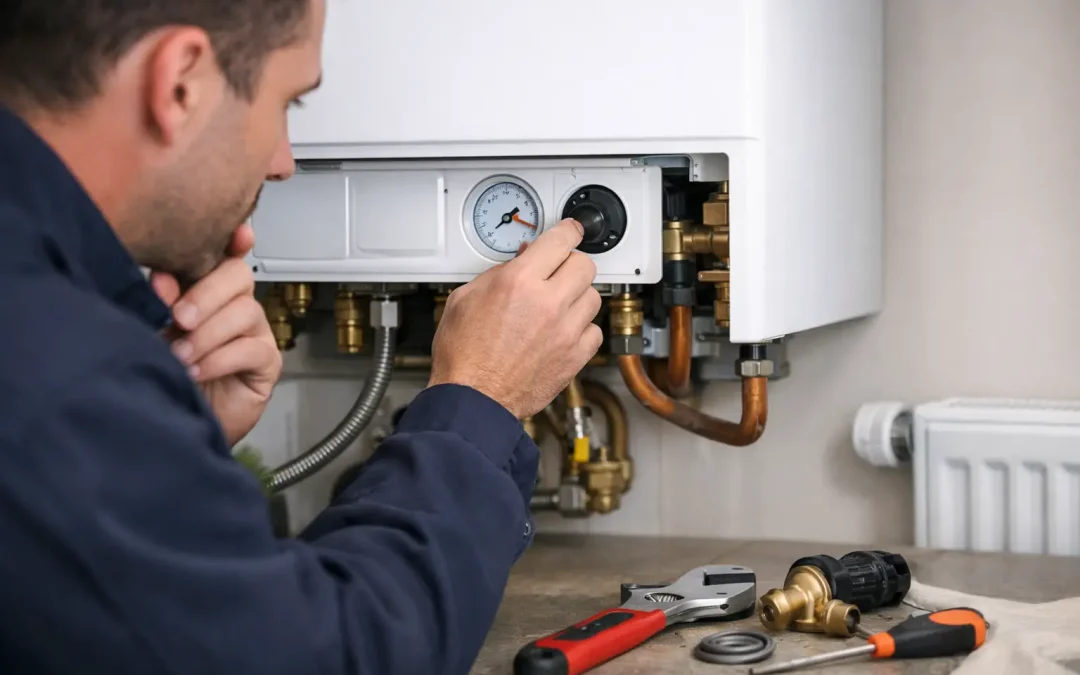
A boiler that repeatedly loses pressure is more than an inconvenient dial reading. It can leave radiators cold, stop the heating or hot water from working properly, and point to a fault that needs attention. If you are asking, why does boiler pressure drop, the answer is usually that water is leaving the sealed heating system, or that a component designed to manage pressure is no longer doing its job.
A single small pressure change can be normal. A boiler that needs topping up regularly is not. The key is knowing the difference, spotting the useful clues and arranging the right repair before a minor issue becomes water damage, a boiler breakdown or a tenant complaint.
Why does boiler pressure drop in a sealed system?
Most modern domestic boilers work with a sealed central-heating system. Water circulates through the boiler, pipework and radiators at pressure. When the system is cold, the pressure gauge will commonly sit around 1 to 1.5 bar, although the correct figure can vary by boiler model and installation. As the heating warms up, the reading normally rises slightly.
Pressure drops when the system loses enough water for the gauge to fall below its normal operating range. Many boilers will display a fault code or stop working if pressure becomes too low. Topping the system up may restore operation temporarily, but it does not explain where the pressure went.
The most common causes are a small water leak, a leaking pressure relief valve, a failed expansion vessel or air released from radiators. Less often, the issue is linked to an internal boiler component. An experienced heating engineer can test the system and identify the cause rather than repeatedly treating the symptom.
A leak on pipework, radiators or valves
Even a very small leak can gradually lower boiler pressure. Leaks are not always obvious. They may occur under floorboards, behind boxed-in pipework, beneath a radiator valve or on pipework in a cupboard, garage or loft area.
Check visible areas for damp patches, staining, drips, corrosion around radiator valves, or a white or green residue on copper fittings. A small amount of discolouration beneath a valve can be an early warning sign. Do not assume there is no leak simply because there is no puddle. Slow leaks can evaporate on warm pipes or remain hidden for some time.
For landlords and letting agents, a report of cold radiators alongside a need to keep repressurising the boiler should be treated as a maintenance issue, not just a tenant operating query. Clear access arrangements and a proper inspection can prevent repeat visits and reduce the risk of damage to the property.
Water discharging from the pressure relief valve
The pressure relief valve is a safety device. It opens if boiler pressure rises too high, allowing water to escape through a discharge pipe, which is often visible outside the property. Once it has opened, it may not reseal fully, allowing a slow but continued loss of water and pressure.
A useful clue is a damp patch, dripping or evidence of water at the end of the external copper pipe after the heating has been on. This should be investigated by a qualified heating engineer. The valve may be faulty, but it can also be reacting to a separate problem, particularly an expansion vessel fault.
A faulty expansion vessel
The expansion vessel manages the natural increase in water volume as the heating system warms up. When it loses its air charge or fails internally, pressure can rise sharply while the boiler is running. The pressure relief valve then releases water to protect the system. Once everything cools down, the gauge can fall very low.
This pattern is particularly common: the boiler pressure appears reasonable when cold, rises close to 3 bar when the heating is on, then drops again later. Repeatedly adding water may keep the boiler running for a short period, but it can make the cycle continue. The vessel and related components need proper testing and repair.
Air being released from radiators
Air in radiators can cause cool areas, gurgling sounds and uneven heat. When air is released during radiator bleeding, the system pressure can fall because a small amount of water is also lost. This is expected occasionally, especially after recent heating work or when a system has been drained and refilled.
However, if radiators repeatedly fill with air, there may be an underlying cause such as a leak, poor system condition or an issue with the expansion vessel. Bleeding radiators over and over without finding the reason can leave the heating unreliable.
When a pressure drop may be normal
It depends on the timing and scale of the change. A pressure reading moving slightly between cold and hot is normal. A small reduction after radiators have been bled can also be expected. In these cases, following the boiler manufacturer’s instructions to restore the correct cold pressure may be appropriate.
What is not normal is pressure dropping from around 1 bar to zero every few days, the boiler locking out repeatedly, or pressure rising dramatically when the heating is running. These signs deserve a professional inspection.
It is also worth checking that you are reading the gauge when the system is cool. Comparing a hot reading with a cold reading can make a normal change look more concerning than it is. Take a photo of the gauge before and after using the heating if the issue is intermittent. This can help an engineer understand the pattern.
What to check before arranging a boiler repair
There are a few safe observations that can make a repair visit more efficient. Look at the pressure gauge when the boiler is cold, then note whether it changes significantly after the heating has run. Check visible radiator valves and pipework for signs of moisture. If there is an external pressure relief pipe, look for evidence of dripping or water beneath it.
You can also note any boiler fault code, unusual noises, cold radiators or recent changes to the property. For example, pressure loss that began after a radiator was removed, new pipework was fitted or decorating work took place could help narrow down the cause.
Avoid removing boiler panels, attempting internal repairs or interfering with safety components. Gas appliances and sealed heating systems contain components that need the correct knowledge and equipment to test safely. If you are unsure how to use your boiler’s filling arrangement, it is better to ask for advice than risk over-pressurising the system.
Why repeated topping up is not a long-term fix
Many homeowners only notice a pressure problem when the boiler stops and the display asks for more water. Repressurising may be part of normal use after bleeding a radiator, but needing to do it frequently is a warning sign.
Each top-up introduces fresh water into the heating system. Over time, this can add oxygen and minerals that contribute to corrosion, sludge and wear within radiators, valves and boiler components. It also masks the original fault, making it harder to judge how quickly pressure is being lost.
A sensible approach is to record how often the system needs topping up and arrange a repair if it happens more than occasionally. The engineer can inspect visible leaks, test the expansion vessel, check the pressure relief valve and assess the boiler’s internal components where necessary.
Boiler pressure problems in rented properties
For rental properties, boiler pressure issues need clear communication between tenant, agent, landlord and contractor. A tenant may be able to report the pressure reading and boiler code, but they should not be expected to diagnose a leak or carry out repair work.
A well-managed repair should establish whether the boiler is operational, whether there is visible water damage, what access is needed and whether the fault affects heating or hot water. Photographs, a clear quotation where further work is required, and completion updates help landlords and letting agents keep records without unnecessary admin.
Regular boiler servicing will not prevent every pressure fault, but it gives an engineer an opportunity to identify early concerns such as corrosion, faulty valves or abnormal pressure behaviour. Landlords should also keep annual gas safety obligations separate from general boiler performance: a CP12 check confirms required gas safety checks, while a pressure-loss fault may still need its own repair investigation.
When to call a heating engineer
Arrange a professional boiler repair if pressure drops repeatedly, the boiler locks out, water is visible around the system, or the gauge rises close to the safety limit when heating is on. Act promptly if you see a discharge pipe dripping outside, notice staining near the boiler, or find a leak beneath a radiator or pipework.
For homeowners, landlords and property managers in Loughborough and the surrounding area, Southdown Group can help assess boiler pressure faults, communicate clearly about the findings and carry out the appropriate heating repair. A timely inspection is usually the most practical way to protect the boiler, keep occupants comfortable and avoid a small pressure issue becoming a larger property maintenance problem.
If the pressure has fallen once, keep an eye on it. If it falls again, treat the repeat pattern as the useful information it is and have the system checked properly.