
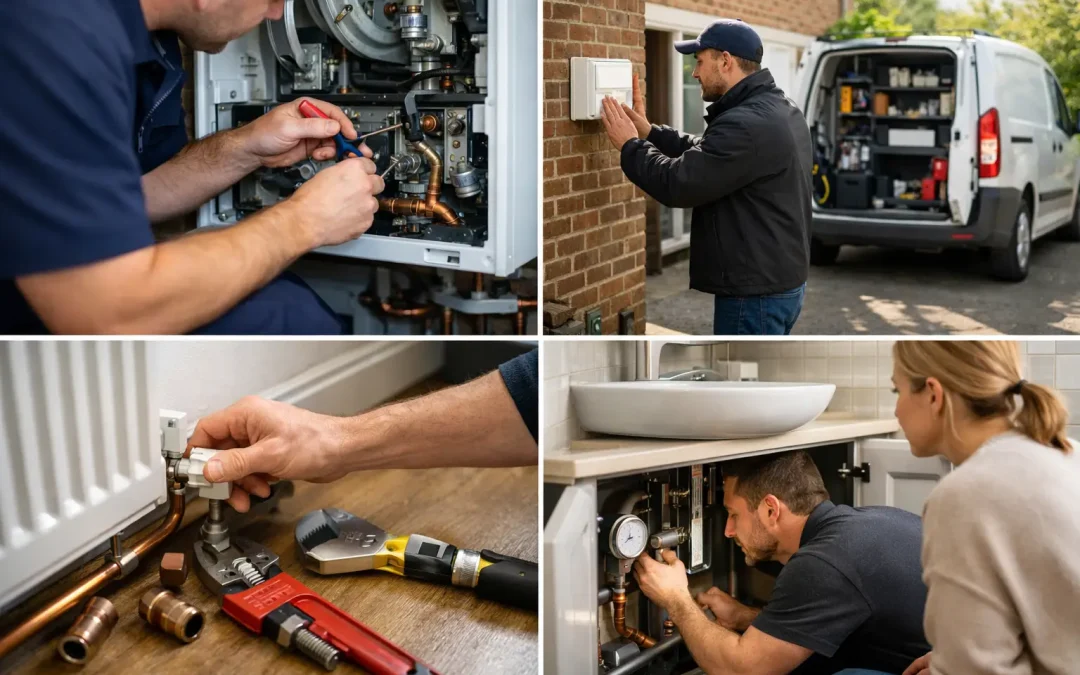
A boiler rarely chooses a convenient moment to fail. It is usually on a cold morning, before tenants move in, or when a household needs hot water most. The best ways to prevent boiler breakdowns are not complicated, but they do rely on regular checks, prompt action when something changes, and professional servicing rather than waiting for a complete failure.
For homeowners, landlords and letting agents, prevention helps avoid disruption as well as the cost and administration that can follow an unexpected heating repair. A well-maintained boiler is more likely to run efficiently, heat the property evenly and provide dependable hot water when it is needed.
Book an annual boiler service
An annual boiler service is the most effective starting point for preventing avoidable faults. A Gas Safe registered engineer can inspect the boiler, check its operation and safety controls, identify worn or deteriorating components, and spot smaller issues before they stop the system working.
Servicing is not the same as a repair. A boiler may appear to be working normally while developing issues that will become more noticeable during colder weather, when the heating is operating for longer periods. Regular servicing gives you a planned opportunity to deal with concerns before they become urgent.
For landlords, a yearly gas safety check and CP12 certificate are legal requirements for relevant gas appliances. However, a gas safety check should not be treated as a replacement for routine boiler servicing. The two have different purposes. Keeping clear records of both also makes property management easier, particularly where several tenancies or properties are involved.
Keep an eye on pressure and boiler messages
Most modern boilers display a pressure reading and will show a fault code if they detect a problem. You do not need to diagnose the fault yourself, but noticing a change early can make a real difference.
Boiler pressure is commonly shown on the front display or pressure gauge. If it repeatedly drops, rises unusually high, or the boiler needs frequent resetting, arrange for a qualified engineer to investigate. Repeated pressure loss can point to a leak, an issue with the expansion vessel, or a fault elsewhere in the heating system. Topping up the system again and again may get the heating working temporarily, but it does not solve the underlying cause.
Keep a note of any error code, unusual noise or pattern of behaviour before reporting the issue. This gives the engineer useful information and can help with arranging the right visit.
Do not ignore small changes in heating performance
A boiler breakdown is often preceded by warning signs. Some are easy to dismiss because the boiler still works, but a prompt repair can prevent a more serious failure and reduce the risk of being left without heating or hot water.
Look out for:
- radiators that remain cold at the top, bottom or in particular rooms
- banging, whistling or gurgling sounds from the boiler or pipework
- hot water that runs hot and cold or takes longer than usual to arrive
- visible drips, staining or corrosion around the boiler, pipes or radiators
- frequent loss of pressure, resets or fault codes
- a heating system that takes much longer to warm the property
Not every symptom means the boiler itself is at fault. A cold radiator may need attention to the radiator valve, system balance or trapped air. A leak could be from pipework rather than the appliance. That is why an organised inspection is preferable to assumptions, especially in rental properties where tenant reports may begin with limited detail.
Protect the heating system, not just the boiler
The boiler is only one part of a wider heating system. Sludge, debris and corrosion within radiators and pipework can restrict circulation and place extra strain on components such as the pump and heat exchanger.
If some rooms are slow to heat, radiators have cold patches, or discoloured water appears when a radiator is bled, it may be time to have the system assessed. Depending on its condition, the right solution could include cleaning the system, balancing radiators, repairing faulty valves or adding suitable protection to help limit future corrosion. The correct approach depends on the age of the system, the water quality and the symptoms present.
It is also sensible to have radiator leaks and faulty valves repaired promptly. Even a small leak can gradually lower system pressure and lead to repeat boiler lockouts.
Use the heating regularly outside winter
Many households switch the heating off completely in warmer months. While this is understandable, it can mean that a problem remains unnoticed until the first cold spell. Running the heating briefly from time to time can help confirm that radiators, controls and the boiler are responding as expected.
This is particularly useful for vacant properties and rental homes between tenancies. Before new tenants arrive, check that the heating and hot water are operating, the programmer responds correctly, and any known issues have been logged and resolved. A simple pre-tenancy check can prevent avoidable call-outs shortly after move-in.
Look after boiler controls and keep access clear
Thermostats, programmers and smart controls all affect how a boiler operates. Incorrect settings, flat batteries in a wireless thermostat or a control that has lost connection can make it appear that the boiler has failed when the cause is elsewhere.
Check that the time programme is suitable for the property, particularly after power cuts or seasonal clock changes. If a thermostat is positioned in a very cold, sunny or draughty spot, it may not give an accurate reading of the home’s temperature.
Keep the area around the boiler reasonably clear and accessible for servicing or repairs. Do not block ventilation openings or store items tightly against the appliance or pipework. Boilers should only be worked on by a Gas Safe registered engineer, but clear access allows inspections and repairs to be completed more safely and efficiently.
Prepare for cold weather
Freezing conditions are a common cause of winter boiler problems, particularly where the condensate pipe runs outside. This pipe carries acidic water away from a condensing boiler and can freeze in prolonged cold weather, causing the boiler to shut down.
A properly installed and protected condensate route reduces this risk. If a property has experienced a frozen condensate pipe before, arrange for it to be reviewed before winter rather than waiting for another cold snap. External pipework, insulation and drainage falls can all affect reliability.
For empty properties, maintain enough background heating during cold periods to help protect pipework from freezing. Landlords and property managers should also make sure tenants know who to contact if they notice a leak, heating fault or loss of hot water. Clear reporting routes lead to quicker action and less avoidable damage.
Act quickly when a leak appears
Leaks around radiators, valves, boiler pipework or beneath the boiler should never be left to monitor indefinitely. Water damage can spread beyond the visible source, while pressure loss can cause the boiler to stop operating.
Take a photo where practical, note when the leak appears, and arrange a professional plumbing or heating repair. For landlords and letting agents, photographs and clear updates help establish the issue, obtain approval where needed and keep property records accurate. Early attention is usually far easier to manage than a leak that has damaged flooring, ceilings or neighbouring rooms.
Plan maintenance around the property, not the crisis
The best ways to prevent boiler breakdowns come down to consistency: annual servicing, early reporting of changes, attention to pressure and leaks, and maintenance of the whole heating system. For managed properties, it also means organising access, recording work completed and ensuring tenants know how to report a concern.
Southdown Group supports homeowners, landlords and property managers across Loughborough and surrounding areas with boiler servicing, heating repairs, plumbing repairs and gas safety checks. A planned visit before winter is often the simplest way to find issues while there is still time to deal with them calmly, rather than when the heating has already stopped.