
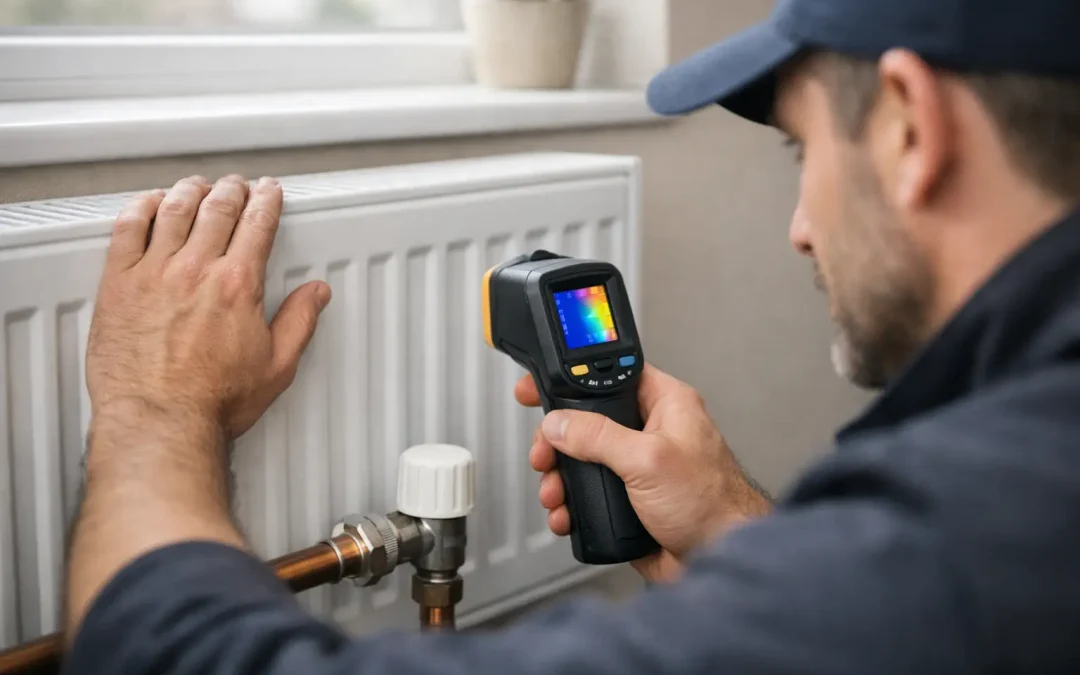
A radiator that is hot at one end and cold at the other is more than an inconvenience on a cold morning. It can make rooms slower to heat, leave tenants dissatisfied and cause your boiler to work harder than it should. Knowing how to handle radiator cold spots starts with identifying where the cold area is, as the location usually points to the cause.
A cold top, cold bottom or cold patch in the middle can each indicate a different issue. Some problems can be resolved with a straightforward radiator bleed, while others need a heating engineer to check the radiator valves, system water quality or boiler settings.
How to handle radiator cold spots safely
Before doing anything, turn the heating off and allow the radiators to cool. Never try to bleed a hot radiator. The water inside can be very hot, and releasing it under pressure can cause injury or damage nearby flooring and decoration.
Start by checking whether the problem affects one radiator or several. If one radiator has a cold spot but the rest of the property heats normally, the issue is likely local to that radiator, its valves or pipework. If several radiators are uneven, or rooms throughout the property feel cooler than expected, the problem may be within the wider central-heating system.
The pattern of the cold spot matters:
- A radiator that is cold at the top but warm at the bottom commonly has trapped air.
- A radiator that is warm at the top but cold at the bottom may have sludge or debris settled inside it.
- A radiator that is cold all over may have a closed valve, a stuck thermostatic valve, poor system circulation or an issue with the heating controls.
- A radiator that is hot near the pipework but cold along the far end can point to restricted flow, a partially closed valve or a balancing issue.
These are useful indicators, not a final diagnosis. Older systems, previous repair work and poor water quality can create more than one issue at once.
Bleeding a radiator with a cold top
If the top of a radiator is cold while the lower section warms up, trapped air is the most likely cause. Air rises in the system and stops hot water filling the upper part of the radiator.
With the heating off and radiator cool, use a radiator key or suitable bleed key at the bleed valve, usually located at the top corner. Hold a cloth and small container beneath it, then turn the key slowly anti-clockwise. You should hear air escaping. Once water begins to come out in a steady trickle, close the valve carefully. Do not overtighten it.
After bleeding one or more radiators, check the pressure gauge on a sealed boiler system once it has cooled. Pressure can drop after air is released. Your boiler instructions will give the normal cold-pressure range, and the system may need topping up if the pressure is too low. If you are unsure how to do this, or the pressure keeps falling, arrange a professional inspection rather than repeatedly adding water.
If bleeding does not improve the radiator, air may not be the only problem. There could be a blockage, a faulty valve or an underlying circulation fault.
When a cold bottom suggests sludge
A cold bottom is often associated with sludge. This is a build-up of corrosion deposits and debris that settles in the lower part of a radiator, reducing the space available for hot water to circulate. It is particularly common in older heating systems or systems that have not been cleaned and protected with inhibitor.
Turning the thermostat up will not clear sludge. Nor will repeated bleeding, because the issue is inside the water circuit rather than trapped air at the top of the radiator.
A heating engineer can assess whether the affected radiator needs removing and flushing, whether the system would benefit from a chemical clean or powerflush, and whether a magnetic filter or inhibitor should be added. The right option depends on the condition of the system. A single affected radiator may only need local attention, while widespread cold bottoms, noisy pipes or dirty system water can justify a more thorough clean.
There is a trade-off here. Flushing an individual radiator can be suitable where the rest of the system is performing well. If multiple radiators are affected, local work may only offer a temporary improvement because debris can continue circulating elsewhere in the system.
Check the radiator valves before assuming the worst
Every radiator normally has two valves. One is usually a thermostatic radiator valve, often marked with numbers, and the other is a lockshield valve, often covered by a plain plastic cap. Both need to be open enough for hot water to flow.
Check that the thermostatic valve is set above the room temperature and has not been turned down accidentally. In rental properties, it is worth checking this before arranging more extensive work, particularly after a tenant has moved in or furniture has been repositioned. A thermostatic valve enclosed behind a sofa, curtain or radiator cover can also read the surrounding temperature incorrectly and shut down too soon.
Do not adjust lockshield valves at random. These are used to balance the system so that each radiator receives an appropriate share of hot water. Opening or closing them significantly can make another room heat poorly. If radiators are heating unevenly across the property, a heating engineer can balance the system properly after checking the boiler, pump and valves.
A stuck thermostatic valve can also leave a radiator cold. This often happens after the heating has been off for a long period. Although the valve may look open, its internal pin can remain stuck closed. It is usually a quick repair for an experienced engineer, but forcing the valve or dismantling it without the right knowledge can create a leak.
Look for wider heating-system warning signs
Radiator cold spots sometimes occur alongside issues that need more than a radiator repair. Pay attention if you notice boiler pressure regularly dropping, brown or black water when bleeding radiators, banging or gurgling sounds, frequent boiler lockouts, leaks around valves, or cold rooms despite the boiler running.
For landlords and letting agents, these details are useful when reporting a tenant maintenance issue. Photos of the radiator, any visible leak and the boiler pressure reading can help a contractor assess the likely fault before attending. Clear access arrangements and a description of which rooms are affected also make the visit more efficient.
Where a boiler is producing no heat or hot water, displaying a fault code, or there is a concern about a gas appliance, do not treat it as a radiator-only issue. A qualified Gas Safe engineer should investigate the heating system safely.
Preventing radiator cold spots returning
Once the immediate problem is resolved, a few practical checks can reduce the chance of it returning. Have the boiler serviced at the recommended interval, particularly before winter. Keep the system pressure within the manufacturer’s guidance, address small leaks promptly and avoid repeatedly bleeding radiators without finding out why air is entering the system.
If the heating system is older, ask whether inhibitor levels and magnetic filtration have been checked. Inhibitor helps limit internal corrosion, while a magnetic filter collects metallic debris before it reaches sensitive boiler components. Neither replaces proper cleaning where sludge is already established, but both can help protect the system after repairs or flushing.
For managed properties across Loughborough and the surrounding area, organised reporting makes a difference. Recording recurring cold radiators, boiler pressure concerns and access details helps identify whether the issue is isolated or part of a pattern across the property.
A cold spot is often a small warning rather than a major failure. Deal with it early, and you are more likely to restore comfortable, even heating before it develops into a wider boiler or circulation problem.