
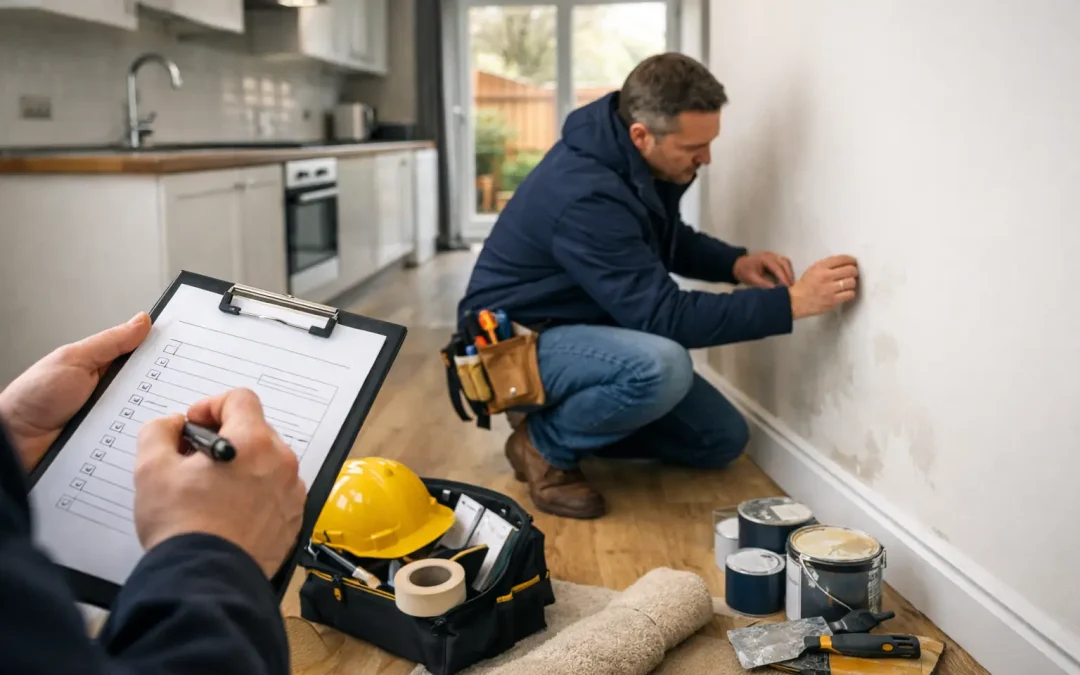
A tenancy ending can expose months of small issues that were not obvious during routine visits: a slow leak beneath a basin, failed sealant around a shower, scuffed walls, loose cupboard doors or damaged fencing. The best end tenancy repair checks give landlords and letting agents a clear route from inspection to completed work, helping to reduce void periods without rushing decisions or overlooking essential repairs.
The aim is not simply to make a property look presentable. A good inspection separates genuine damage from fair wear and tear, identifies repairs that could worsen if delayed, and creates an organised scope of works for the next tenancy. For busy landlords and property managers, that structure is often the difference between a controlled turnaround and a property sitting empty while several trades are booked separately.
Start with the inventory, then inspect the whole property
The check-in inventory, photographs and condition report should be the starting point for an end-of-tenancy inspection. They provide context for marks, missing items and existing defects. Without this comparison, it is difficult to make a fair judgement about what has changed during the tenancy.
However, an inventory should not replace a practical property inspection. Open cupboards, run taps, flush toilets, test accessible doors and windows, and look closely in areas where water, daily use and poor ventilation commonly cause deterioration. Take dated photographs as you go, including wider shots that show location as well as close-ups of the issue.
Keep the report factual. Record what can be seen, where it is and what action may be needed. For example, “water staining to the ceiling below bathroom” is more useful than assuming the cause before a contractor has investigated it. Clear records support fair conversations with tenants and allow maintenance work to be quoted accurately.
Best end tenancy repair checks: the priority areas
Not every issue needs the same response. A small paint mark may wait until planned decorating, while a water leak, loose handrail or insecure external door needs prompt attention. The most effective inspections consider condition, safety, likely cost of delay and the effect on the incoming tenant.
Plumbing, water damage and bathrooms
Bathrooms and kitchens deserve careful attention because minor faults can lead to expensive damage during a void or early in the next tenancy. Check taps, wastes, toilet flushes, shower screens, visible pipework and seals around baths, showers and sinks. Look inside vanity units and beneath kitchen sinks for swelling, staining, mould or signs of a slow leak.
Failed silicone sealant is easy to dismiss, but gaps can allow water behind a bath or shower tray. Likewise, a toilet that continues to run after flushing may seem minor until it becomes a complaint or causes unnecessary water use. Record the symptoms and arrange appropriate repairs rather than relying on a quick cosmetic fix.
Ceiling stains, peeling paint or soft flooring should be investigated before decorating. Painting over evidence of moisture may make a room look better for a short period, but it does not resolve the cause.
Kitchens, joinery and internal finishes
A kitchen inspection should cover worktops, cupboard hinges, drawer runners, handles, plinths, flooring and wall finishes. Pay particular attention to doors that no longer close properly, swollen units around appliances or sinks, damaged worktop edges and loose fittings. These issues can make a kitchen difficult to use and can deteriorate rapidly once a new tenancy begins.
Throughout the property, test internal doors, handles, locks, wardrobes and stair handrails. Check for damaged skirting boards, holes in walls, cracked plaster and areas where decorating is beyond a simple touch-up. A single room may only need local repairs, while repeated marks, poor previous repairs or smoke staining can make full redecoration the more sensible option.
The decision should be proportionate. Normal fading of paint or worn carpet in a long tenancy is not automatically tenant damage. Clear evidence, the property’s original condition and the expected lifespan of materials all matter.
Heating, ventilation and visible damp
Where accessible controls are available, check that radiators respond and look for corrosion, leaks or cold spots that may indicate a maintenance issue. Note any extractor fans that are noisy, ineffective or not operating, particularly in bathrooms and kitchens. Poor extraction can contribute to condensation, mould and peeling finishes, even where the tenant has kept the property reasonably clean.
Visible mould should be documented carefully rather than treated as a purely cleaning issue. Its cause may relate to ventilation, a leak, cold surfaces or a combination of factors. A practical repair plan may include addressing seals, leaks, damaged plaster or decorating, alongside improvements that help the room dry and ventilate properly.
External condition and security
End-of-tenancy checks should extend beyond the front door. Inspect gates, fencing, paths, external lights, gutters visible from ground level, brickwork, roofline and any outbuildings included in the tenancy. Storm damage, loose fence panels and blocked guttering can become more costly if left through a void period.
Check that external doors close and lock correctly, and that windows appear secure. Any lost keys, damaged locks or compromised access arrangements should be dealt with through an organised changeover process. This protects the property and gives new tenants confidence from the first day.
Turn findings into a planned scope of works
The inspection becomes useful when it is converted into a clear schedule. Group items by urgency and trade, but do not assume every job needs a separate contractor. Many end-of-tenancy projects involve overlapping work: a plumber may need to resolve a leak before plaster repairs and decorating can begin; damaged kitchen units may require joinery, then finishing work.
A well-planned scope distinguishes between immediate repairs, works required before reletting and improvements that can be budgeted for later. It should state the location of each issue, the proposed repair, any materials or access requirements, and whether further investigation is needed. This reduces misunderstandings and helps avoid a decorator arriving before a leak repair has been completed.
For letting agents, the process should also allow for tenant communication, key collection, approval of quotations, booking dates and completion photographs. These are administrative details, but they are often what delay a void refurbishment when no one has clear responsibility for coordinating them.
Avoid the false economy of cosmetic-only repairs
A quick coat of paint and a few minor fixes can be appropriate where the property is fundamentally sound. But cosmetic work should follow, not hide, repairs to water damage, loose fittings, damaged plaster or worn joinery. Repeating the same small jobs between tenancies can cost more over time than carrying out a properly planned repair or improvement once.
This does not mean every void needs a full refurbishment. The right level of work depends on the property’s condition, the likely tenant market, the previous tenancy length and the landlord’s wider plans. A property being held as a long-term investment may benefit from durable upgrades such as improved bathroom finishes or hard-wearing flooring. A recently refurbished home may need only targeted maintenance.
The key is to make decisions with a complete view of the property, not from a list of isolated defects. That is particularly valuable where a bathroom, kitchen or entire rental property needs several trades coordinated in the right order.
Make the handover easier for the next tenant
Before remarketing or check-in, carry out a final quality check after repairs and cleaning are complete. Confirm that agreed work has been finished, waste has been removed, rooms are left tidy and photographs have been received where required. It is also sensible to check that meter readings, keys and property information are ready for the new tenancy.
For landlords and agents in Loughborough, Leicester, Nottingham and the surrounding area, using one organised contractor for repair checks and void works can reduce the number of calls, appointments and handovers involved. Southdown Group can coordinate the required trades, provide clear updates and help turn an end-of-tenancy list into a managed programme of work.
A calm, evidence-led inspection protects everyone involved. Deal with the repairs that matter, document the condition properly and give each job enough time to be completed in the right order. The next tenant should walk into a home that feels cared for, not one where unresolved problems have merely been covered up.