
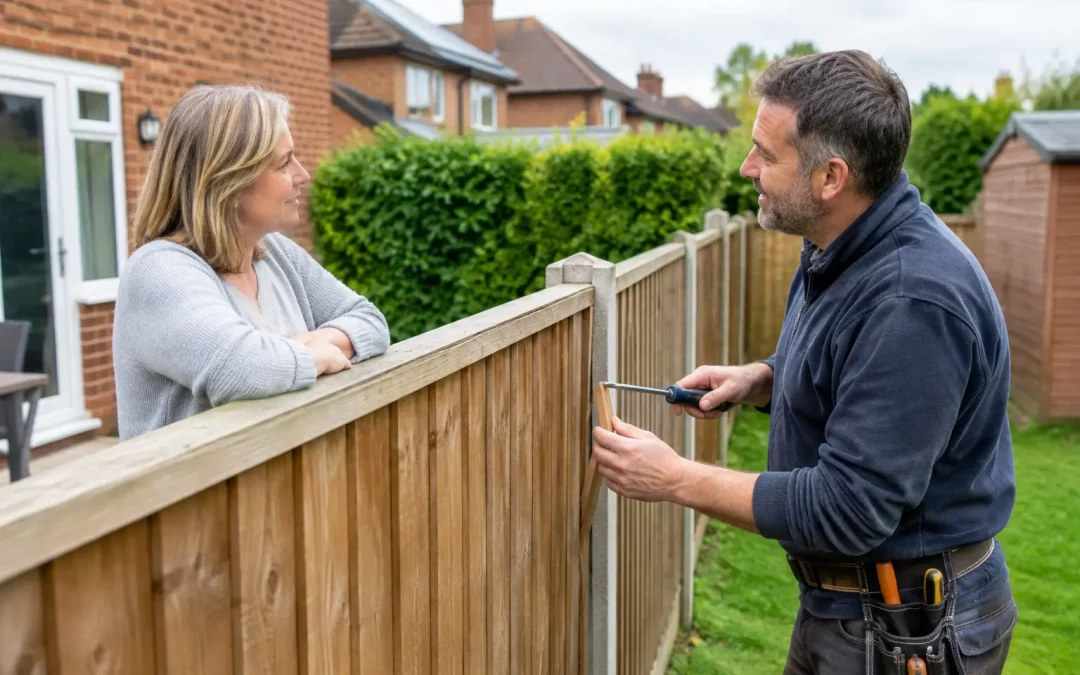
A fallen fence can quickly become more than an untidy garden problem. It may affect security, pets, privacy, a tenancy, or plans to sell or let the property. The question of who pays for fence repairs is rarely answered by which side of the garden the fence sits on. It depends on ownership, the cause of the damage, any written agreement and, in rented homes, the tenancy terms.
For homeowners, landlords and letting agents, the most useful approach is to establish responsibility before arranging work. That avoids unnecessary disputes, prevents duplicated repairs and gives everyone a clear record of what has been agreed.
Who pays for fence repairs between neighbours?
In most cases, the person responsible for the boundary fence pays for its repair or replacement. The difficulty is proving which neighbour is responsible. A fence is not automatically owned by the property on its left or right when viewed from the road. That is a common assumption, but it is not a reliable rule.
Start with the title deeds and any available boundary information. These documents may show a “T” mark pointing into a property, which can indicate that owner’s responsibility for maintaining that boundary. An “H” mark may indicate a shared boundary, although it is still worth checking the wording in the deeds or any agreement attached to them.
Land Registry title plans can help identify the general boundary, but they do not always confirm who owns a particular fence or who must maintain it. Older properties may have unclear or incomplete information. In that situation, a sensible conversation with the neighbour is often the quickest route forward.
If one neighbour owns the fence, the other neighbour is not normally required to contribute just because they benefit from it. However, neighbours may agree to share the cost where the fence improves security, privacy or the appearance of both gardens. Put that agreement in writing, even if it is a simple email confirming the scope of work and each party’s contribution.
When shared responsibility is more likely
Some boundaries are managed jointly through a formal agreement, a lease, a transfer document or an estate management arrangement. Flats, converted buildings and newer developments can have more specific rules than a typical house with a rear garden.
A shared fence may also be replaced jointly where neither party can establish ownership and both want the issue resolved. This is a practical agreement rather than an automatic legal obligation. It should cover the fence style, height, materials, timing, access and how the invoice will be paid.
Does the cause of the damage change who pays?
Yes. Ownership matters, but the cause of damage can change the outcome.
If high winds cause an older panel to fail, the owner of that fence will usually arrange and fund the repair. If a neighbour, visitor or contractor damages the fence through carelessness, the person who caused the damage may be expected to pay, even where they do not own the fence. Clear photographs, dates and a short written record can be valuable if there is disagreement later.
Tree-related damage needs a careful approach. If a healthy tree falls during exceptional weather, responsibility may not be straightforward. If a tree was visibly dead, unstable or poorly maintained and then damaged a fence, the tree owner may have greater responsibility. Avoid making assumptions or carrying out major work before the facts have been discussed, especially where the tree remains close to buildings, cables or public areas.
Home insurance may help with storm damage or accidental damage, depending on the policy. Many policies have limits for fencing, exclusions for wear and tear, and an excess that may make a small claim impractical. Check the policy before authorising replacement, particularly after widespread storm damage.
Fence repairs in rented properties
For rental property repairs, the first question is usually whether the damage resulted from normal weather, deterioration, an accident or tenant action. The tenancy agreement should also be checked, as it may set out duties for gardens, gates, fences and reporting damage.
A landlord will commonly arrange repairs to a fence that has failed through age, poor condition or storm damage, particularly where it affects the security of the property or a neighbouring boundary. Fences are not always covered by the same statutory repair responsibilities as the structure of the property, so the written tenancy agreement and the specific circumstances matter.
A tenant may be responsible where they, their visitor or a pet has caused damage. For example, damage from forcing a gate, attaching unsuitable items to a fence, or allowing an animal to chew or break panels may be treated differently from a panel that has simply blown down in poor weather.
Tenants should report a damaged fence promptly and provide photographs where possible. They should not commit to work with a neighbour or contractor in the landlord’s name without approval. The landlord or letting agent needs to confirm ownership, agree the required standard of repair and decide whether an insurance claim or recovery of costs is appropriate.
For letting agents and property managers, a clear process saves time. Record the report, establish whether the boundary is the landlord’s responsibility, contact the neighbouring owner where required, obtain a clear quotation and keep photographic records before and after work. This is particularly useful at the end of a tenancy, when responsibility for damage may need to be assessed fairly.
What if your neighbour refuses to repair their fence?
A neighbour is not generally obliged to install or improve a fence simply because another owner wants greater privacy or security. If the fence belongs to them but is in poor condition, your options depend on whether it creates a genuine risk, breaches a covenant or affects land that you own.
In many cases, a calm proposal works better than a formal dispute. Explain the issue, share photographs, suggest a practical specification and ask whether they are willing to contribute or give access for repairs. If you are prepared to fund a replacement yourself, make sure you have their written permission before entering their land or removing their fence.
Do not assume that you can take down a neighbour’s damaged fence, attach a new fence to it, or fix posts on their side of the boundary. Even well-intended work can create a boundary dispute. Where ownership is uncertain and the relationship has become difficult, legal advice may be appropriate before works begin.
Choosing repair or replacement
Not every damaged fence needs full replacement. A loose panel, failed post, damaged gate or localised section of boarding may be repaired if the remaining fence is sound. This can reduce disruption and preserve a consistent appearance along the boundary.
Replacement is often more sensible where several posts are leaning, repeated panels have failed, timber has rotted at ground level, or the fence no longer provides proper security. A contractor should assess the full run of fencing rather than focusing only on the panel that has fallen. Replacing one section beside several weak sections can lead to repeated call-outs and further neighbour discussions.
For managed properties, the specification should be agreed before booking. Confirm the fence height, panel or closeboard style, post type, gate requirements, access arrangements and removal of old materials. This prevents disputes about whether the completed work matches what was approved.
A practical way to resolve fence responsibility
Keep the process simple. Check the deeds and tenancy documents, take dated photographs, speak to the neighbour or managing agent, and confirm responsibility before work is arranged. If costs will be shared, record the agreement in writing and ensure the quotation describes exactly what will be repaired or replaced.
Where access, tenant communication and several repairs need coordinating, an organised property maintenance company can manage the practical side without adding unnecessary administration. Southdown Group supports homeowners, landlords and letting agents across Loughborough and surrounding areas with fencing repairs alongside wider external property maintenance.
A damaged fence is easier to deal with when everyone knows the boundary, the scope and the next step. A short, written agreement before work starts can protect neighbourly relationships just as effectively as the new fence itself.