
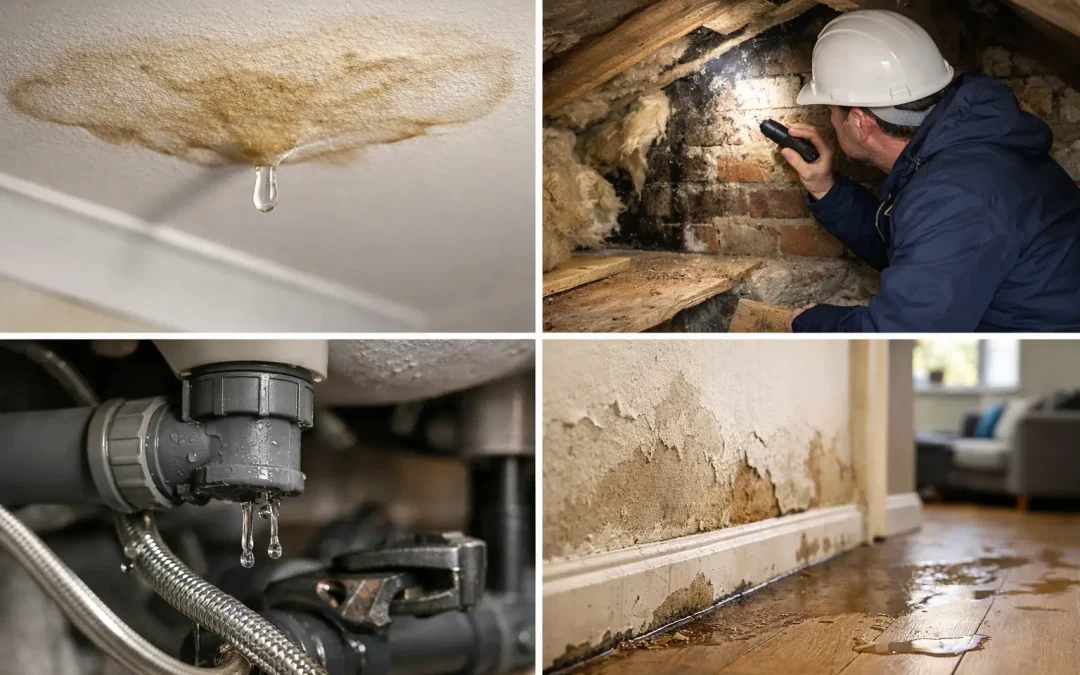
A small brown mark beneath a bathroom ceiling can be the first visible sign of a much larger problem above it. Knowing the best signs of water leaks helps homeowners, landlords and property managers act before a minor plumbing fault leads to damaged finishes, mould, tenant disruption or a more involved repair.
Not every leak is dramatic. Many develop slowly behind boxing, under floors, around shower trays or within concealed pipework. The key is to notice changes in the property, report them clearly and arrange a proper investigation rather than simply painting over the evidence.
10 best signs of water leaks to look for
1. Damp patches, staining or bubbling paint
Discolouration on ceilings, walls or around window reveals is one of the clearest warning signs. It may appear as a yellow-brown ring, a darker damp patch, blistered paint or wallpaper that has started to lift.
The position of the mark provides a useful clue, but does not always identify the source. A ceiling stain below a bathroom could relate to a shower, toilet, bath waste, radiator pipe or a leak travelling along a pipe before appearing elsewhere. Similarly, damp near an external wall could be caused by a plumbing leak, failed guttering, damaged brickwork or a roof defect. Investigation matters before repairs to plaster and decoration are planned.
2. A persistent musty smell
A property does not need visible mould to have a moisture problem. A lingering musty or earthy smell in a cupboard, bathroom, bedroom or hallway can indicate damp materials that are not drying properly.
This is particularly common beneath sinks, behind washing machines, inside vanity units and in rarely opened cupboards. In rental properties, a tenant may notice the smell before any damage becomes visible. Early reporting gives the contractor a better chance of finding the issue before moisture affects adjacent rooms or finishes.
3. Mould that keeps returning
Mould can be linked to condensation and poor ventilation, so it is not automatically proof of a leak. However, mould that repeatedly returns in one isolated area, especially away from windows or external corners, deserves closer attention.
Look at the pattern. Mould around a shower enclosure may point to failed sealant, leaking pipework, damaged grout or poor extraction. Mould on the ceiling below a bathroom may indicate a slow leak above. Treating the surface without addressing the moisture source will only provide a temporary improvement.
4. A sudden increase in water use
An unexplained rise in metered water use is easy to overlook, especially in a busy rental portfolio or shared property. If household routines have not changed but consumption has, a hidden leak is one possible cause.
A simple initial check is to ensure no taps, appliances or toilets are being used, then observe the water meter. If the meter continues to move, water may be passing through the system. This does not locate the fault, but it gives a useful reason to arrange a plumbing inspection. Do not delay if there is also damp, reduced pressure or a visible escape of water.
5. A toilet that runs after flushing
A toilet that continues to trickle, refill or make intermittent filling noises may be wasting a surprising amount of water. Internal cistern components can wear, stick or fail, allowing water to pass continuously into the pan.
This is often a relatively contained repair when dealt with promptly. Left unresolved, it can increase water bills and create avoidable inconvenience for occupants. For landlords and letting agents, it is worth treating a reported running toilet as a maintenance task rather than waiting until a routine inspection.
6. Drips, puddles or damp inside cupboards
The cupboard below a kitchen sink is a common place for slow leaks to go unnoticed. Check for damp shelf panels, swollen chipboard, corrosion on pipework, staining around waste connections and pooled water at the back of the unit.
The same applies to bathroom basin units, utility areas and cupboards housing pipework. A loose trap, worn washer, damaged flexible connector or faulty appliance connection can cause gradual damage to cabinetry and flooring long before water reaches an open area.
7. Loose flooring or warped skirting boards
Water can affect timber, laminate, engineered flooring and skirting boards. Raised edges, soft spots, lifted vinyl, separating joints or swollen skirting may indicate that moisture has reached the floor structure or the wall-floor junction.
There are other explanations, including age, movement or poor installation, so this sign needs context. If the issue appears close to a bathroom, kitchen, radiator, external door or washing machine, it is sensible to check for a leak or water ingress before replacing finishes.
8. Low water pressure or an unreliable boiler system
A noticeable change in water pressure can be caused by several things, including supply issues or a faulty fitting. But if pressure drops alongside damp patches, dripping pipework or repeated topping up of a sealed heating system, there may be a leak requiring professional assessment.
Heating systems should be handled carefully. Do not attempt gas-related work or make changes to a boiler yourself. A qualified professional can assess whether the problem is associated with a radiator valve, visible pipework, the heating circuit or another part of the system, and coordinate any making-good work needed afterwards.
9. Water marks around showers, baths and toilets
Bathrooms are exposed to water every day, which means small defects can quickly become bigger ones. Cracked sealant, loose shower screens, damaged waste fittings, movement around a bath or a leaking toilet pan connection can allow water into walls and floors.
Pay attention to water appearing on the floor after a shower, staining on the ceiling below, or a bathroom unit that feels damp at its base. The source may only show itself when the shower, bath or toilet is in use. Clear information about when the problem happens helps a contractor investigate efficiently.
10. Damp outside walls or problems after rain
Not all suspected leaks originate from plumbing. Overflowing gutters, blocked downpipes, defective roof coverings, damaged pointing and cracks in external finishes can all allow rainwater into a property.
If a damp patch worsens after rainfall, or you can see overflowing guttering and staining on brickwork, the issue may sit outside rather than behind an internal pipe. This is where one organised property maintenance company is useful: the investigation may involve plumbing, roofing, guttering, brickwork, plastering and decorating rather than a single repair in isolation.
What to do when you spot a possible leak
Start by limiting further damage where it is safe to do so. Move belongings away from the affected area, place a container beneath a visible drip and avoid using the shower, tap, appliance or toilet that seems connected to the problem. If water is close to electrical fittings, do not touch switches or fittings. Seek urgent professional advice and follow appropriate electrical safety guidance.
Take clear photographs of stains, drips, damaged finishes and any standing water. For landlords and letting agents, ask the tenant for the date the issue was first noticed, the rooms affected and whether it changes after using a particular fitting or during rain. These details help with triage, access arrangements and selecting the right trade.
Avoid covering the problem with paint, sealant or a temporary patch before the source has been assessed. Concealing a stain may make the property look better briefly, but trapped moisture can continue to damage plasterboard, timber and floor finishes. Once the cause is repaired and the area has dried sufficiently, making-good work can be planned properly.
Why leak repairs often need more than a plumber
The plumbing repair is only one part of the job when water has escaped into the building fabric. A repaired pipe may leave damaged plaster, swollen joinery, stained ceilings, compromised flooring or mould-affected surfaces. The property may also need careful drying and a decision on whether materials can be retained or should be replaced.
For homeowners, coordinating this can be time-consuming. For letting agents and property managers, the challenge also includes communicating with tenants, arranging access, recording the damage, approving quotations and confirming completion. A coordinated contractor can manage the sequence of work so that repairs, drying, plastering, decorating and related maintenance are not treated as disconnected tasks.
Southdown Group supports property maintenance work across Loughborough and the surrounding area with an office team that can help organise bookings, occupant communication, access, updates and the trades needed to return a property to good order.
When a small sign should become a priority
A visible drip, expanding stain, ceiling bulge, water near electrics or water escaping from a pipe should be treated as a priority. The same applies where a tenant cannot safely use their only toilet, washing facilities or kitchen sink. The longer water remains uncontrolled, the more likely it is that a straightforward repair turns into a wider refurbishment task.
Less obvious signs, such as a musty cupboard or minor recurring mould, still deserve a planned inspection. They may prove to be ventilation or condensation issues, but that is a useful outcome too. The practical aim is not to assume the worst; it is to identify the cause early, protect the property and make decisions based on evidence rather than guesswork.
A well-documented report, prompt access and a clear repair plan can turn a worrying water mark into a controlled maintenance job before it affects the rest of the property.