
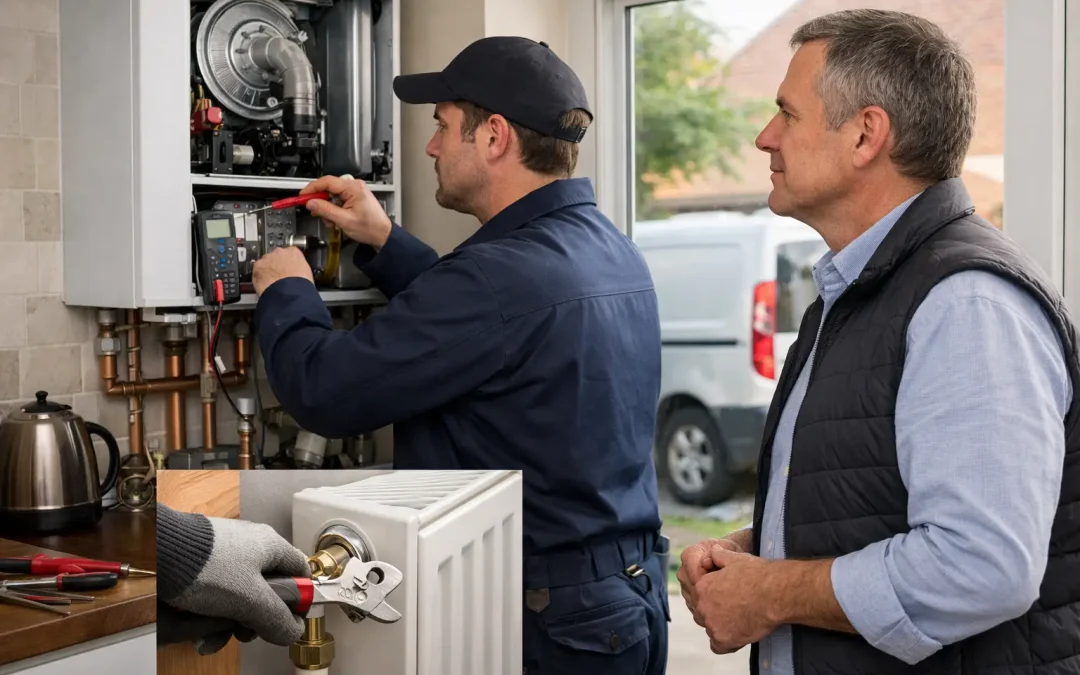
A boiler that stops working in a rental property rarely causes just one problem. It can leave tenants without heating or hot water, create urgent access arrangements and lead to avoidable repair costs. This guide to boiler servicing for landlords explains how to plan annual servicing properly, keep the right records and reduce the chance of disruption during the colder months.
For landlords and letting agents, boiler servicing is not simply an item to tick off once a year. It is part of managing a safe, reliable home and meeting your responsibilities around gas appliances. A well-organised approach also makes life easier for tenants, contractors and anyone managing the property on your behalf.
Boiler servicing and gas safety checks are not the same thing
A boiler service and an annual gas safety check are often arranged at the same visit, but they have different purposes.
A boiler service focuses on the boiler’s condition and operation. A Gas Safe registered engineer will inspect the appliance, check for signs of wear or faults, carry out appropriate tests and make sure it is operating safely and efficiently. The exact work will depend on the appliance, its age, manufacturer guidance and what the engineer finds on site.
A landlord gas safety check covers the gas appliances, pipework and flues for which the landlord is responsible. When the checks are satisfactory, the engineer provides a Landlord Gas Safety Record, commonly known as a CP12 certificate.
For rented homes in England, landlords must arrange a gas safety check at least every 12 months for relevant gas appliances and flues. Boiler servicing is strongly recommended annually and may be required to maintain the manufacturer’s warranty, but it does not automatically replace the legal gas safety check. Booking both together is usually the clearest and most practical arrangement, provided the engineer completes and records each requirement correctly.
What a boiler service should help identify
Most boiler faults do not begin as a complete breakdown. Small changes can indicate a developing issue: pressure dropping repeatedly, radiators taking longer to warm up, unusual noises, intermittent hot water or an error code that returns after a reset. A service gives an engineer the opportunity to spot concerns before they become a tenant-reported repair.
During a service, the engineer may inspect the boiler and its controls, assess the flue arrangement, check gas and combustion performance where required, and look for leaks, corrosion or worn components. They will also consider whether the appliance is safe to use. If a fault or safety concern is identified, the engineer should explain what has been found, what work is recommended and whether the boiler needs to be left off until repairs are completed.
A service cannot guarantee that an older boiler will not fail later in the year. Components can fail without warning, particularly in heavily used or ageing systems. What it can do is provide a clear snapshot of the boiler’s condition and help you make informed decisions before a minor issue becomes more expensive or inconvenient.
Do not overlook the wider heating system
The boiler may be working correctly while the heating system still performs poorly. Cold areas on radiators, persistent air in the system, leaking radiator valves, faulty thermostats and seized controls can all affect tenant comfort and boiler efficiency.
When arranging the visit, it is useful to pass on any reported issues rather than booking a standard service without context. If a tenant has mentioned low pressure, a dripping pipe beneath the boiler or one radiator that never heats properly, the contractor can allow suitable time to investigate. This is particularly helpful for properties managed from a distance.
How to organise an annual boiler service without chasing everyone
The best time to arrange servicing is before the main heating season, rather than waiting until the first cold spell. Late summer and early autumn often allow more flexibility for tenant access and any follow-up repairs. It also means problems can be addressed before the heating is needed every day.
Keep a simple property record with the boiler make and model, installation date where known, previous service date, warranty information, the latest gas safety record and notes of repairs. This helps when a tenant reports a problem and avoids relying on scattered emails or paperwork.
For landlords with several properties, set reminders well ahead of each due date. The gas safety inspection can be carried out up to two months before the current record expires while preserving the existing anniversary date, provided it is completed within the permitted window. That gives more room to arrange access without creating a gap in compliance.
Clear communication matters as much as the booking itself. Let tenants know why the appointment is needed, give them the proposed date and time window, and ask them to report any boiler or heating concerns beforehand. Tenants should not be expected to carry out gas work or diagnose faults, but their day-to-day experience of the system is valuable information.
If a managing agent is involved, agree who is responsible for instructing the contractor, approving additional work and receiving certificates. Avoid assumptions. Delays often arise because an engineer identifies a repair, but no one has authority to approve it or arrange a return visit.
Access, tenant notice and practical preparation
Landlords have a right to arrange necessary repairs and safety inspections, but access should still be handled properly. In most situations, give tenants at least 24 hours’ written notice and arrange a reasonable time. Emergency situations are different, but an annual service should be planned rather than treated as an emergency.
Ask tenants to make the boiler area accessible and to keep pets safely out of the way where appropriate. Cupboards around boilers can collect storage over time, so a polite reminder ahead of the visit can save time. If the boiler is in a bedroom, loft or locked communal area, make sure the access arrangements are confirmed before the engineer attends.
If access is missed, record the contact attempts and rebook promptly. Repeated refusals or non-response should be handled carefully, as landlords still need to show they have taken reasonable steps to meet their gas safety duties. Good records of notices, messages and booking attempts are useful if access becomes difficult.
Records to keep after the appointment
After a gas safety check, landlords must provide the gas safety record to existing tenants within 28 days and give new tenants a copy before they move in. Records must be retained for at least two years. Keeping a digital copy alongside the service report and invoice makes future property management much simpler.
A useful file for each property should include the current CP12 record, boiler service documentation, repair reports, photographs where relevant, warranty details and confirmation that tenants received the required paperwork. If work is recommended but deferred, make a note of why and set a review date. Some repairs can reasonably be planned; safety-related work cannot be left unresolved.
It is also sensible to keep separate notes on smoke and carbon monoxide alarm responsibilities. These requirements are related to property safety but are not replaced by a boiler service or CP12 check.
When a service leads to a repair or replacement decision
An engineer may find that a boiler needs a straightforward repair, such as a replacement component or attention to a leak. In other cases, repeated faults, obsolete parts, poor efficiency or the cost of ongoing repairs may make replacement worth considering.
There is no single age at which every boiler should be replaced. The decision depends on its reliability, service history, available parts, energy performance and the condition of the wider heating system. A newer boiler with a one-off fault may be an obvious repair. An older appliance with repeated call-outs and costly parts needs a more considered conversation.
For landlords and agents around Loughborough, Leicester and Nottingham, using an office-supported local contractor can make this process easier. Southdown Group can coordinate tenant access, provide clear findings and quotations where further work is needed, and confirm completion without adding unnecessary administration to the property manager’s day.
A practical guide to boiler servicing for landlords
The most effective approach is simple: arrange the annual gas safety check before it falls due, book the boiler service at the same time where suitable, communicate clearly with the tenant and act promptly on any safety or repair recommendations. Do not wait for a breakdown to discover that the boiler has been losing pressure for months or that access arrangements have never been agreed.
A well-maintained boiler will not remove every maintenance call, but it gives landlords a stronger record of care and gives tenants confidence that concerns are being managed properly. Put the next service date in the diary now, while there is time to arrange it calmly and complete any necessary work before it becomes urgent.