
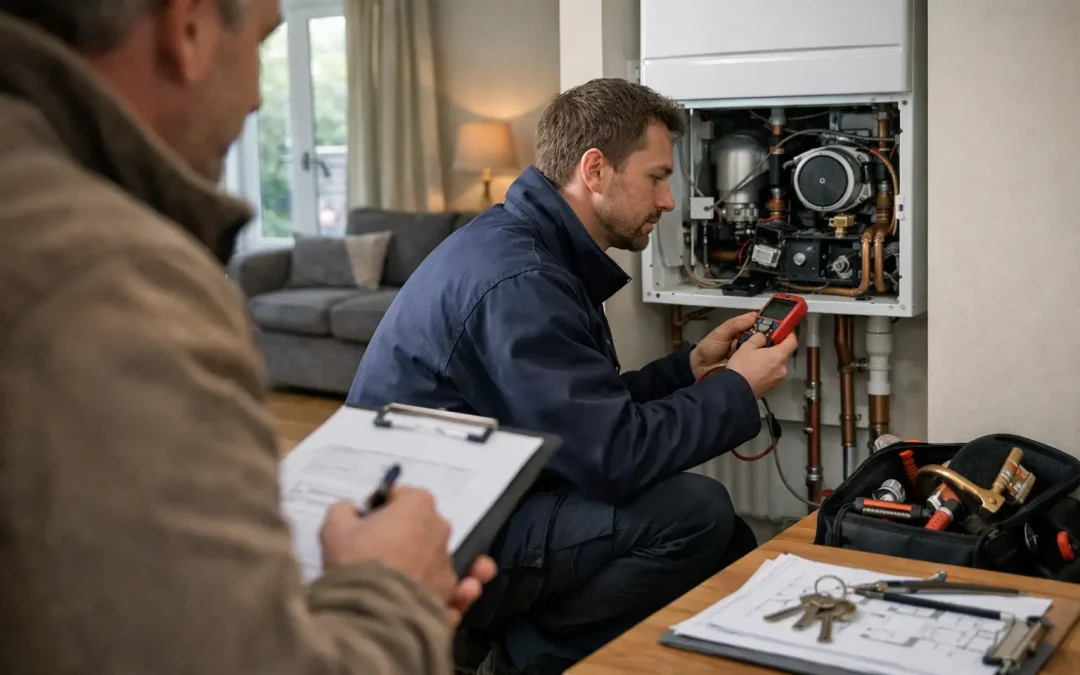
A tenant reports that the radiators are cold, the hot water is intermittent, or water is appearing beneath the boiler. For a landlord, the issue is rarely just the repair itself. Heating repairs for landlords also involve tenant communication, property access, safety checks, clear records and making sure the job is properly followed through.
A missed call or vague update can quickly turn a manageable fault into a frustrated tenant, a potential complaint and further damage to the property. A more organised response protects the tenancy, helps preserve the condition of the home and reduces unnecessary administration for landlords and letting agents.
Know when a heating report needs prompt action
Not every heating fault has the same urgency, but every report should be acknowledged and assessed without delay. A complete loss of heating or hot water is particularly significant during colder weather, in a property occupied by young children, older residents or people with health conditions. A leak from heating pipework, a boiler or a radiator also needs early attention, as water can damage floors, ceilings, decoration and electrical fittings.
Any concern involving a smell of gas, a carbon monoxide alarm or signs of combustion problems should be treated as a safety matter rather than a routine maintenance request. Tenants should follow the appropriate emergency safety guidance and the issue should be handled by a suitably qualified, Gas Safe registered professional. Landlords should never ask tenants to investigate gas appliances or attempt repairs themselves.
For less immediate issues, such as one radiator not heating properly or a thermostat that is difficult to operate, it is still sensible to arrange an inspection promptly. Small faults can point to a wider issue with controls, pipework, pressure, valves or the heating appliance. Early diagnosis is usually easier than waiting for a complete failure.
Heating repairs for landlords and legal duties
Landlords have a duty to keep installations for the supply of water, gas, electricity, sanitation, space heating and hot water in repair and proper working order. In practice, this means acting reasonably and within a reasonable timescale once a heating issue has been reported or identified.
The right timescale depends on the fault, the weather, the occupants and whether the property has any alternative source of heating or hot water. There is no useful one-size-fits-all response time. A broken programmer in mild weather may be managed differently from a total heating failure in January, but both require communication and a clear plan.
Gas appliances and flues also require an annual gas safety check by a Gas Safe registered engineer. That annual check is not a substitute for maintenance or repair. A boiler can have a valid gas safety record and still develop an operational fault later in the year. Keeping inspection reports, repair records, tenant messages and completion photographs provides a clear history if questions arise.
Use a controlled process from report to completion
The fastest way to lose control of a heating repair is to pass messages between a tenant, agent, contractor and landlord without one person coordinating the process. A structured workflow keeps everyone clear on what is happening and what is needed next.
A practical process should cover five stages:
- Record the report clearly. Establish what is not working, when the issue started, whether there is any leak or warning light, and whether heating and hot water are both affected. Photographs or a short video can help where appropriate, especially for visible leaks, radiator issues or control displays.
- Assess the priority and arrange attendance. The contractor should understand the reported symptoms before attending, while avoiding assumptions about the cause. This helps ensure the right trade and likely parts or equipment can be planned for.
- Coordinate tenant access. Confirm appointments directly with the tenant where authorised, collect keys if required and keep the landlord or managing agent informed. Clear access arrangements prevent wasted visits and reduce the need for repeated calls.
- Provide a practical repair recommendation. Once the fault is diagnosed, the recommendation should explain the problem, the proposed work and whether further investigation, parts or a replacement option is required. If the issue is linked to a leak or damaged finishes, the scope should also account for making good afterwards.
- Close the job properly. A useful completion update confirms what has been done, whether the heating is operating as expected and whether any follow-on works remain. Photographs are particularly valuable for landlords managing properties remotely or agents reporting back to a client.
This approach is not just about administration. It gives tenants confidence that their report has been taken seriously and gives landlords a reliable audit trail of how the issue was handled.
Repair or replacement: make the decision on the facts
A heating fault does not automatically mean a boiler or radiator needs replacing. Many faults can be resolved through a targeted repair, such as replacing a radiator valve, correcting a control issue, repairing a leak, replacing a component or addressing poor circulation. The best option depends on the appliance condition, age, repair history, availability of parts and the likely reliability after the work is completed.
Replacement may be the more sensible route where faults are recurring, parts are obsolete, leaks have caused corrosion or the existing system is no longer dependable for a rental property. However, the lowest immediate cost is not always the best long-term decision. Repeated call-outs can create more tenant disruption, more administration and a greater chance of another loss of heating at an inconvenient time.
Landlords should ask for a clear explanation of the options rather than simply accepting a broad recommendation. A good assessment distinguishes between a repair that restores reliable operation and a short-term fix that is likely to fail again. Where a replacement affects pipework, controls, radiators or surrounding finishes, coordinating the work as one planned job is often more efficient than booking separate trades independently.
Consider the property beyond the heating appliance
Heating problems are sometimes symptoms of a wider maintenance issue. A radiator leak may leave damaged flooring, swollen skirting boards or staining to a ceiling below. Persistent condensation can point to ventilation, insulation or tenant-use issues as well as heating performance. An external boiler condensate pipe may be vulnerable to cold weather, while poor controls can leave occupants unable to use an otherwise functioning system effectively.
This is where a multi-trade property maintenance company can make a practical difference. The repair may require a heating specialist, but the property may also need plumbing work, plaster repairs, decorating, joinery or flooring repairs afterwards. Having one company coordinate the process reduces the risk of the initial fault being fixed while the visible damage is left unresolved.
For void properties, heating checks should form part of the wider inspection before a new tenancy begins. Testing radiators, controls, taps, toilets, showers and visible pipework before move-in helps identify issues when access is straightforward. It also avoids the difficult conversation that follows when a tenant reports a fault during their first week in the property.
Keep tenants informed without creating more work
Tenants do not expect landlords to diagnose technical faults over the phone. They do expect to know that someone is dealing with the problem. A short acknowledgement, a confirmed appointment window and an update if parts are needed can make a substantial difference to the tenant experience.
Letting agents and property managers face an added pressure: they need accurate information to pass on without chasing several different trades. A contractor with office support can manage bookings, access, tenant contact, quotations, scheduling and completion updates in a more organised way. This is particularly useful across portfolios where several repairs may be active at the same time.
Professional communication also helps set sensible expectations. Some heating faults are resolved in one visit; others require ordered parts, further testing or approval for replacement work. Being clear about this from the outset is better than promising a resolution before the cause has been confirmed.
Plan maintenance before the colder months
Reactive repairs cannot be eliminated entirely, but planned attention can reduce avoidable problems. Annual gas safety checks should be booked in good time, and landlords should review recurring reports from the previous winter. If a property has repeatedly suffered cold radiators, unreliable controls, leaks or pressure issues, it is worth investigating before demand for heating repairs increases.
Landlords with several homes should also keep a simple property history showing appliance age, previous repairs, gas safety dates and known concerns. This makes budgeting easier and helps identify when a repair pattern is becoming uneconomical. For properties in Loughborough, Leicester, Nottingham and surrounding areas, local coordination is especially valuable when tenants, agents and owners are based in different places.
Southdown Group can support landlords and letting agents with organised property maintenance, coordinating heating-related repairs alongside plumbing, leak repairs, radiator replacements and any follow-on making-good work. The aim is to give every party a clear route from the first report to a completed, documented job.
A heating problem will always be inconvenient, but it does not need to become disorganised. When reports are handled promptly, access is managed properly and the full condition of the property is considered, landlords can protect both their investment and the people living in it.