
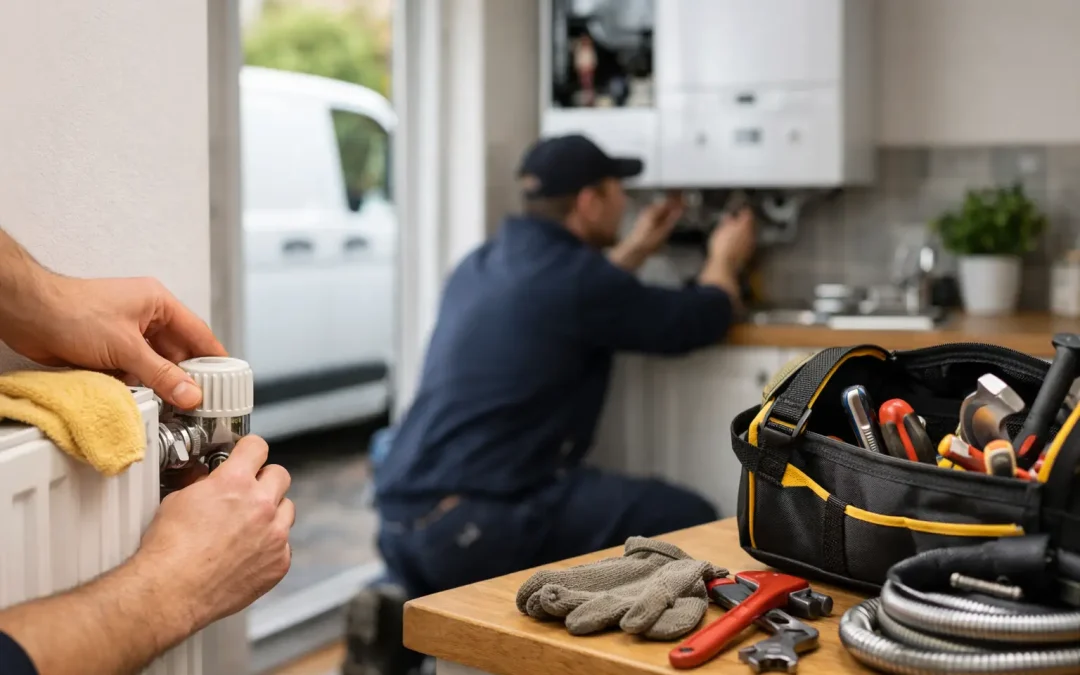
A boiler service usually takes place once a year, but a little preparation can make the appointment easier, safer and more useful. Knowing how to prepare for boiler service means the engineer can spend their time checking the appliance properly rather than waiting for access, searching for paperwork or dealing with avoidable delays.
For homeowners, the main aim is to make the boiler and its controls easy to reach. For landlords and letting agents, good preparation also means confirming tenant access, sharing the right contact details and making sure any reported heating concerns are passed on before the visit. These simple steps help keep the appointment organised and reduce the chance of a return visit being needed.
What happens during a boiler service?
A boiler service is a planned safety and maintenance check carried out by a Gas Safe registered engineer. The exact checks depend on the boiler make, model and installation, but they commonly include inspecting the boiler and flue, checking the appliance is operating safely, examining key components, checking the pressure and controls, and looking for signs of leaks or deterioration.
It is different from a boiler repair. A service may identify a developing fault, but if a repair or replacement part is needed, this may need to be quoted for and booked separately. Let the booking team know about any known issues beforehand, such as intermittent hot water, unusual boiler noises, low pressure or radiators that are not heating evenly.
Clear access to the boiler and controls
The most useful thing you can do before a boiler service is make the boiler accessible. Many boilers are fitted in kitchen cupboards, utility rooms, airing cupboards, garages or loft spaces. Wherever yours is located, remove stored items from directly around the appliance before the engineer arrives.
The engineer will need safe, practical access to the boiler front panel, pipework, flue route where accessible, condensate pipe and nearby heating controls. If the boiler is in a cupboard, clear cleaning products, food, coats, boxes and other belongings from the area. Do not attempt to remove the boiler casing yourself.
If access involves a loft, make sure there is a safe route to the loft hatch and that the space is reasonably clear. Let the office know in advance if access is restricted, if the boiler is in an unusual location, or if there are parking or entry instructions that will help the visit run smoothly.
Make sure somebody can provide access
A boiler service cannot be completed if the engineer cannot get into the property or reach the appliance. Homeowners should arrange to be present or nominate a trusted adult who can provide access and answer basic questions about the heating system.
For rented properties, access planning is often the most important part of the job. Landlords and letting agents should give the tenant clear notice of the appointment, confirm that the date and time work for them, and share any relevant access arrangements with the contractor. If keys are held by an agent or property manager, check that they are available and that the engineer has the correct collection instructions.
It also helps to make sure the tenant knows the service is routine. They may be able to point out issues that have not yet been formally reported, such as a boiler that cuts out occasionally or a radiator that stays cold at one end. This is valuable information, but it needs to be shared before or at the start of the appointment.
Find the boiler paperwork if you have it
You do not need to have every document to arrange a boiler service, particularly in an older property. However, any available boiler paperwork can be useful. This may include the installation manual, service record, warranty information or previous service reports.
If the boiler is still within its manufacturer warranty, regular servicing may be a condition of that warranty. Keeping the service record up to date can therefore matter if a warranty claim is needed later. Ask the engineer to complete the service book or provide appropriate paperwork following the visit.
For landlords, keep service and gas safety documentation with the property records. Where a gas safety check is also due, make this clear when booking. A landlord gas safety certificate, often referred to as a CP12, is a separate legal requirement for rented homes with gas appliances. Combining appointments can be practical where appropriate, but the required checks and documentation should be clearly agreed in advance.
Note any problems before the appointment
A boiler can appear to work normally on the day of a service even if it has been causing problems at other times. A short note of what you have noticed gives the engineer a better starting point and may help identify whether further investigation is needed.
Before the visit, consider whether you have experienced any of the following:
- hot water that runs hot and cold or takes a long time to arrive;
- radiators that do not heat properly, make noise or need frequent repressurising;
- boiler pressure that drops repeatedly;
- error codes, warning lights, leaks or unusual sounds; or
- heating controls that do not follow the expected programme.
Take a photograph of any error code if it appears, particularly if it clears before the appointment. Avoid trying to dismantle the appliance, alter gas connections or carry out gas work yourself. If you smell gas or suspect a gas leak, follow the emergency guidance from your gas supplier rather than waiting for a routine service visit.
Check the heating controls and thermostat
The boiler engineer may need to test the boiler in heating and hot-water modes. Make sure the thermostat, timer or smart controls are available and that you know where they are. If the controls are operated through an app, it can help to have your phone charged and the relevant app accessible.
There is no need to leave the heating running all day, but avoid turning the boiler off at the isolation switch immediately before the appointment unless you have been advised to do so. If the system has been switched off for a long period, tell the engineer. This gives useful context if the boiler or controls do not respond as expected.
Households with pets should also plan for the visit. Keeping dogs or other animals in a separate room can make access safer and less stressful for everyone, especially if the boiler is near the front door, kitchen or utility area.
Preparing for boiler service in a rental property
For rental homes, the preparation is as much about communication as it is about the boiler itself. A tenant should know who is attending, the expected appointment window and how to report any heating concerns. The landlord or managing agent should make sure the contractor has an up-to-date tenant contact number, property address and any useful notes about parking, gate codes or key access.
It is also sensible to confirm whether the property has more than one gas appliance. A boiler service alone may not cover a separate gas fire, cooker or other appliance requiring a safety check. Clear instructions at booking stage prevent confusion and help ensure the correct work is scheduled.
For landlords and agents managing several properties around Loughborough, Leicester or Nottingham, a well-organised contractor can reduce the administrative burden. Providing access details, tenant contacts and previous reports at the outset makes it easier to arrange the work, provide updates and keep property records in order.
Do not wait if the boiler is showing signs of a fault
Annual servicing supports safe, reliable operation, but it is not a substitute for reporting a fault when it arises. If there is no heating or hot water, visible water leaking from the boiler, repeated lockouts or a persistent error code, explain this when making contact. The visit may need to be booked as a boiler repair rather than a standard service, depending on the symptoms.
This distinction matters because a service is designed to inspect and maintain the appliance, while fault finding can require more time, testing and potentially replacement parts. Clear information from the start helps the right type of appointment be arranged.
A prepared boiler service appointment is straightforward: provide access, share relevant paperwork and report concerns honestly. Whether you are looking after your own home or coordinating a tenant visit, those few minutes of organisation allow the engineer to focus on what matters – checking that the heating system is operating safely and identifying issues before they become more disruptive.