
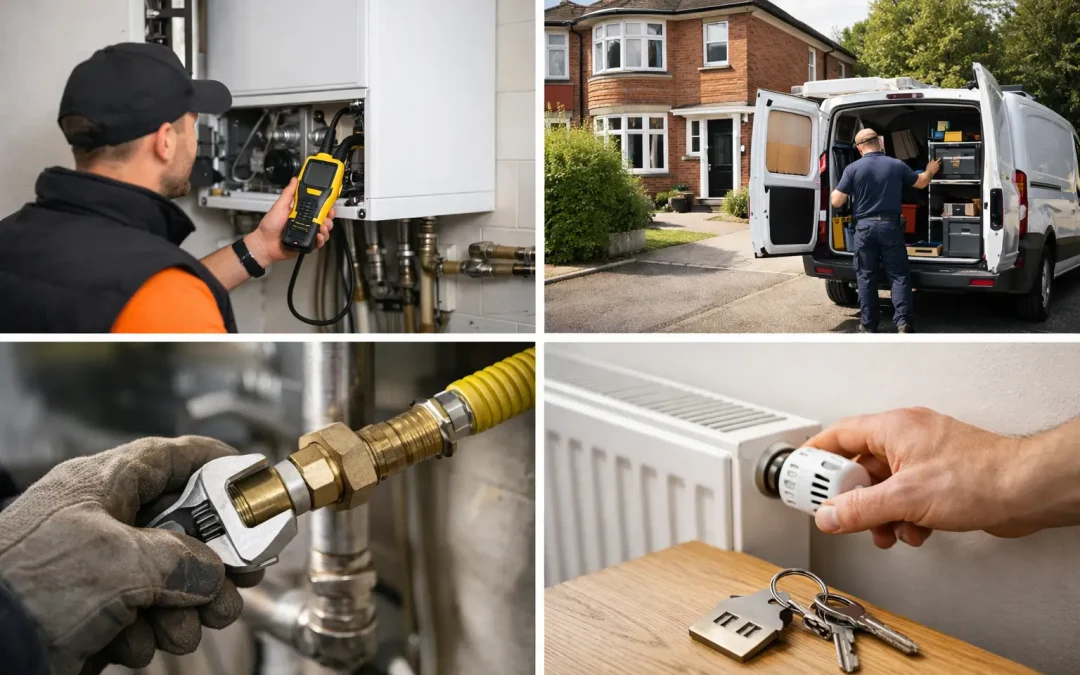
A missed gas safety check rarely starts as a big problem. More often, it begins with a boiler service being put off, a tenant not replying about access, or uncertainty over which appliances are your responsibility. This landlord gas safety guide is here to make the process clearer, so you can stay compliant, keep tenants safe and avoid last-minute pressure.
For landlords and letting agents, gas safety is not just a certificate to file away. It sits alongside day-to-day property management, tenant communication, boiler servicing, repairs and record keeping. When those parts are handled properly, the annual check tends to be straightforward. When they are not, small admin issues can quickly turn into delays, repeat visits and unnecessary risk.
What a landlord is responsible for
If a rental property has gas appliances, pipework, flues or a gas supply serving landlord-owned equipment, the landlord has legal duties to maintain those items safely. In practice, that means arranging an annual gas safety check by a Gas Safe registered engineer and making sure appliances and flues covered by the landlord are kept in safe condition.
This usually includes boilers, gas fires, cookers or hobs supplied by the landlord, and any associated flues. If a tenant has brought in their own gas appliance, responsibility can be different. That said, it is still sensible to be clear in the tenancy paperwork about what is landlord-owned and what is not, because confusion around ownership often causes problems when checks are due.
A common grey area is a property where the boiler is landlord-owned but a freestanding cooker belongs to the tenant. The landlord still needs to ensure their own gas installation is safe, but the tenant’s appliance may sit outside the landlord’s testing requirement. Where there is any doubt, it is better to clarify early rather than discover the issue on the day of inspection.
The annual gas safety check and CP12
The annual check is the point most landlords recognise because it results in the Gas Safety Record, often referred to as a CP12. The check confirms that relevant gas appliances and flues have been inspected and tested as required.
What happens during a CP12 check
A proper check is more than a quick look at the boiler. The engineer will inspect the appliance, test that it is operating safely, check ventilation where needed, assess the flue, and look for signs of unsafe combustion or gas leaks. They will also confirm key details for the record, including the property address, appliance information, inspection date and any faults identified.
If the appliances pass, the certificate can be issued. If there is a problem, the engineer should explain what has been found and what action is needed. Sometimes that means a repair can be arranged quickly. In other cases, an appliance may need to be turned off for safety until the fault is rectified.
Timing matters more than many landlords realise
Leaving the check until the certificate has already expired creates avoidable stress. Access can fall through, tenants may be away, or a fault could be found that needs follow-up work before compliance is fully back in place.
Good landlords and agents usually treat gas safety like any other scheduled maintenance item and book ahead. That gives enough time to contact the tenant properly, deal with diary changes and handle repairs if the inspection highlights an issue.
A practical landlord gas safety guide to avoiding problems
Most gas safety issues in rental properties are not caused by the inspection itself. They are caused by poor preparation, weak records or unclear communication with tenants.
The first step is knowing exactly what gas appliances are in each property and which ones you supply. That sounds obvious, but portfolios change over time. Appliances get replaced, old fires are capped off, kitchens are updated and records are not always refreshed. If your information is out of date, engineers can arrive expecting one setup and find another.
The second step is treating boiler servicing and gas safety as connected, even though they are not identical. A boiler service does not replace a CP12 check, but regular servicing helps spot wear, performance issues and minor faults before they become safety concerns or breakdowns. For rental properties, that matters because a boiler that fails in winter is rarely just a heating problem. It becomes a tenant issue, an access issue and an admin issue very quickly.
The third step is making access straightforward. Tenants should be given clear notice, sensible appointment windows and an explanation of why the visit matters. Most tenants cooperate when communication is handled properly. Problems usually arise when messages are vague, late or passed through several people.
Tenant access and failed appointments
Access is one of the main reasons landlords fall behind with gas safety checks. You still need to take all reasonable steps to complete the inspection, even if a tenant is difficult to reach or repeatedly unavailable.
That means keeping records of calls, messages, emails and appointment letters, and showing that you have made genuine efforts to arrange entry. It is not enough to decide the tenant is unresponsive and leave it there. If the check is overdue and no proper evidence of attempted access exists, that can put the landlord in a difficult position.
This is one reason organised booking support matters. Clear appointment confirmation, reminders and follow-up communication can save time for landlords and letting agents managing multiple properties. It also reduces the chance of wasted visits, which nobody wants.
What happens if a gas appliance fails the check
A failed result does not always mean the whole property is in chaos, but it does need a prompt and sensible response. The action required depends on what the engineer finds. Some issues are relatively straightforward repairs. Others involve a serious safety concern that means the appliance cannot continue to be used.
For landlords, the key point is speed and clarity. You need to know what the fault is, whether the appliance has been isolated, what work is recommended and how quickly it can be addressed. If tenants are in the property, communication matters just as much as the technical fix. They need to understand what has changed and what happens next.
Where the failed appliance is the boiler, the knock-on effect can be significant, especially in colder months. That is another reason not to treat gas safety checks as a last-minute annual chore. Early inspections leave room to sort issues before they affect occupancy or create pressure around compliance.
Records, renewals and portfolio management
For one rental property, it is fairly easy to remember when a certificate is due. For several properties, it becomes a system issue. Dates need to be tracked, records stored properly and renewals booked in good time.
A reliable contractor should help make that process easier, not harder. Landlords and agents often need appointment coordination, notes on access, quotations for remedial work, and confirmation when jobs are complete. If you are chasing basic updates after every visit, the admin burden builds up fast.
This is especially relevant for landlords and letting agents across Loughborough, Leicester and nearby areas who may be managing mixed property types with different boilers, heating systems and tenant arrangements. Consistency matters. A professional approach to booking, attendance, reporting and follow-up can make gas safety feel manageable rather than disruptive.
How gas safety fits with wider property maintenance
Gas safety does not sit in isolation. It overlaps with heating reliability, plumbing condition and general upkeep of the property. A tenant who reports low boiler pressure, leaking radiator valves or an intermittent hot water issue may be flagging a maintenance problem rather than a gas safety issue, but if those reports are ignored, they can still lead to disruption when the annual check comes around.
Landlords are usually best served by dealing with routine repairs promptly and keeping service history tidy. That gives engineers a clearer picture of the system and reduces the chance of unpleasant surprises. It also shows tenants that the property is being looked after properly, which often improves cooperation when access is needed for inspections.
Choosing the right contractor for gas safety work
Not every landlord wants the same level of support. Some only need a straightforward annual check. Others need a contractor who can manage tenant contact, flag repair issues clearly, provide photos where useful and keep the whole process organised.
The right fit is usually a company that combines technical competence with good communication. Gas Safe registration is essential, but so is the ability to turn up as arranged, explain findings in plain English and handle follow-on work efficiently. For landlords and letting agents, reliability in the office matters as much as reliability on site.
That is often where a well-organised local contractor stands out. If a property needs a gas safety check, a boiler repair and a minor plumbing issue sorting at the same time, dealing with one dependable company can reduce delays and simplify communication.
If you manage rental property, the best time to think about gas safety is before it becomes urgent. Keep your records current, book checks early, stay on top of boiler servicing and use contractors who communicate clearly. That way, the certificate is not a scramble at the end of the process – it is simply the result of a property being managed properly.