
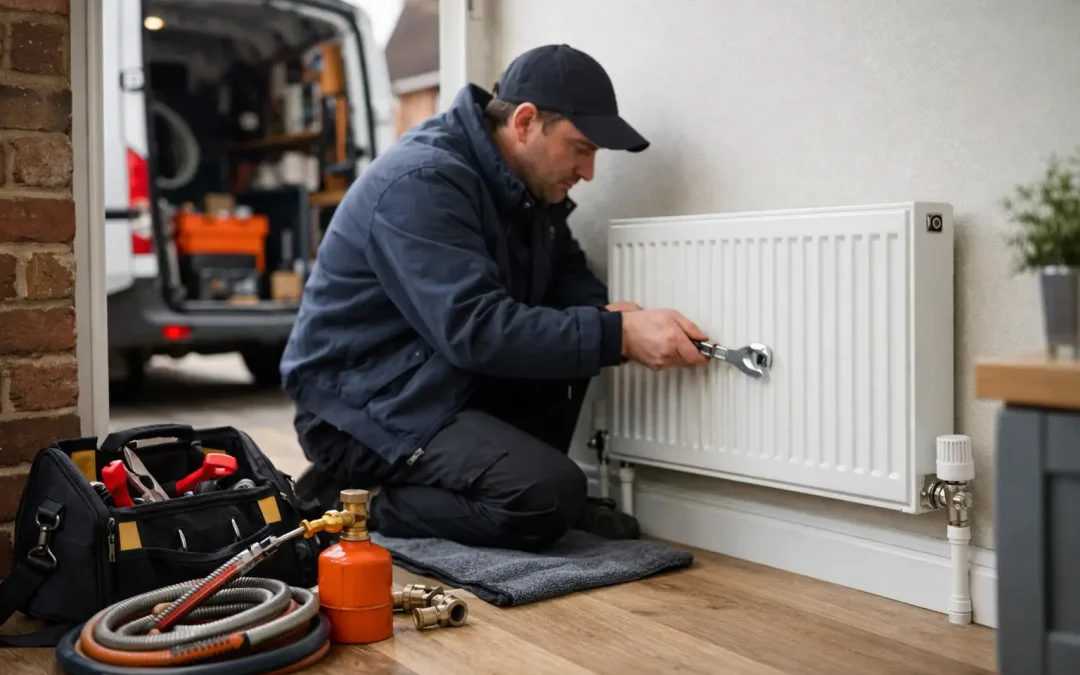
A cold patch at the bottom of a radiator, a valve that will not stop dripping, or a room that never seems to warm up properly usually starts as a minor annoyance. It often turns into a larger heating problem if it is left alone. If you are looking for radiator repair Nottingham services, it helps to know what is actually going wrong, what can wait, and what needs attention sooner.
Radiator faults are common in homes, rental properties and small commercial spaces. They can affect comfort, heating efficiency and, in some cases, cause water damage if a leak is ignored. For landlords and letting agents, they can also create avoidable tenant complaints and repeat callouts when the root cause is not dealt with properly the first time.
Common radiator problems in Nottingham properties
Most radiator issues fall into a few familiar categories. Some are straightforward. Others point to wider problems within the heating system.
A radiator that is cold at the top often has trapped air inside it. A radiator that is cold at the bottom may have a build-up of sludge, rust or debris restricting the flow of hot water. If the whole radiator stays cold while others heat up, the issue may be linked to the valve, pipework, balancing, or the wider heating circuit.
Leaks are another common reason people call for radiator repair in Nottingham. The leak may be coming from the valve, the spindle, the pipe connection or the radiator body itself. A small drip can look harmless, but it can stain flooring, damage skirting boards and lead to a more disruptive repair if it worsens.
There are also cases where the radiator works, but not properly. You may notice uneven heat, slow warm-up times, banging noises, or a thermostat that never seems to match the room temperature. These are easy to live with for a while, but they usually mean the system is working harder than it should.
Why radiator repairs should not be delayed
Heating issues rarely improve on their own. A sticking valve stays stuck. Corrosion inside the system does not reverse. A minor leak tends to become a larger one, especially once the heating is running regularly through colder months.
There is also the cost of inefficiency. If one or more radiators are underperforming, the boiler often runs longer to try to achieve the temperature set on the thermostat. That can increase energy use without improving comfort. In rental properties, this can also lead to frustration for tenants who are paying to heat rooms that never get properly warm.
Where a radiator problem is linked to sludge or poor circulation, the fault may not be isolated to one room. It can be the first visible sign that the heating system needs a wider check. That is why a proper diagnosis matters more than a quick temporary fix.
What a proper radiator repair should include
A good repair starts with identifying the actual cause. That sounds obvious, but radiator problems are often treated too narrowly. For example, replacing a valve may solve the visible leak, but if the radiator is also full of debris or badly balanced, the heating performance may still be poor afterwards.
When attending a radiator repair, a professional heating engineer should check the radiator itself, the valves, the connections, and how that radiator is performing in relation to the rest of the system. In some cases, the answer is a simple repair. In others, a replacement part, flushing work, or system adjustment is the better option.
This is particularly important in managed properties. Landlords and letting agents usually need more than a basic attendance. They need clear communication, practical advice, and confidence that the repair has actually resolved the issue rather than delayed a second visit.
Radiator repair Nottingham for landlords and letting agents
Rental properties bring a slightly different set of challenges. Access needs to be arranged, tenants need updates, and repair decisions often need to be made quickly to keep things moving. A radiator fault in an occupied property is not just a heating problem. It becomes an admin issue if communication is poor.
That is why many landlords and agents prefer to use a contractor who can manage the process properly from booking through to completion. If a radiator is leaking in a tenant’s bedroom or a living room is not heating, the priority is not just the repair itself. It is getting the issue assessed promptly, reporting back clearly, and completing the work without creating unnecessary chasing.
This is where an office-supported contractor can make a real difference. Instead of relying on scattered messages and unclear updates, you get a more organised process with quotations where needed, photos if appropriate, and confirmation when the job is complete.
When a radiator can be repaired and when it should be replaced
Not every faulty radiator needs replacing. In many cases, the issue is with a valve, an airlock, a connection or a system circulation problem. These can often be repaired without replacing the whole unit.
Replacement becomes more likely if the radiator body itself has corroded through, if there are repeated leaks from weakened areas, or if the unit is heavily sludged and no longer performing properly despite other repair work. Older radiators can sometimes be kept going, but there is a point where ongoing patch repairs stop being practical.
It also depends on the wider condition of the heating system. If several radiators are showing similar symptoms, replacing one may not solve the bigger issue. Equally, if only one radiator has failed and the rest of the system is sound, a targeted repair or replacement may be the most sensible route.
A reliable contractor should explain that difference clearly. The right answer is not always the biggest job. It is the option that resolves the problem properly and makes sense for the property.
Signs the problem may be bigger than one radiator
Sometimes the radiator is just where the problem shows up first. If multiple radiators are slow to heat, if rooms warm unevenly across the property, or if the boiler pressure keeps dropping, there may be a wider fault affecting the heating system.
Noise can be another clue. Gurgling, knocking or persistent rushing sounds may suggest trapped air, circulation issues or debris in the system. If radiators need bleeding regularly, that should be looked into rather than treated as routine. Repeated air in the system can point to an underlying issue.
In these cases, radiator repair in Nottingham should not be treated in isolation. A broader heating check may be needed so the same complaint does not keep returning.
Choosing a contractor for radiator repair Nottingham
The quality of the repair matters, but so does the way the work is handled. For homeowners, that means turning up as arranged, explaining the issue clearly and carrying out a tidy, professional repair. For landlords and agents, it also means managing access, communicating clearly and avoiding unnecessary delays.
A dependable local contractor should be able to assess the fault, advise whether repair or replacement is the better option, and carry out the work to a professional standard. They should also be realistic. Some radiator issues are minor and can be sorted quickly. Others need parts, follow-on work, or a wider system review.
That practical approach is often what customers are looking for. Not dramatic claims, just clear advice and organised service. Southdown Group works with homeowners, landlords and property managers across Nottingham, Loughborough and surrounding areas who need exactly that kind of support with heating and plumbing repairs.
Why local knowledge helps
Many properties across Nottingham and the wider East Midlands have a mix of older heating systems, updated pipework, replacement radiators and later alterations. That can make diagnosis less straightforward than it first appears.
A contractor with experience across local housing stock is more likely to recognise common set-ups and recurring faults. In one property the issue may be ageing valves. In another it may be poor balancing after previous changes to the system. In rental homes, it may be a maintenance issue that has been reported late and has already affected flooring or decoration.
That local, practical experience helps keep repairs proportionate. The goal is not to overcomplicate the job. It is to identify the fault properly and put it right with the least disruption.
If your radiator is leaking, not heating properly, or causing repeated complaints, it is usually worth dealing with it before it becomes a wider heating problem. A clear diagnosis and a proper repair can save time, avoid repeat visits and keep the property comfortable when it matters most.