
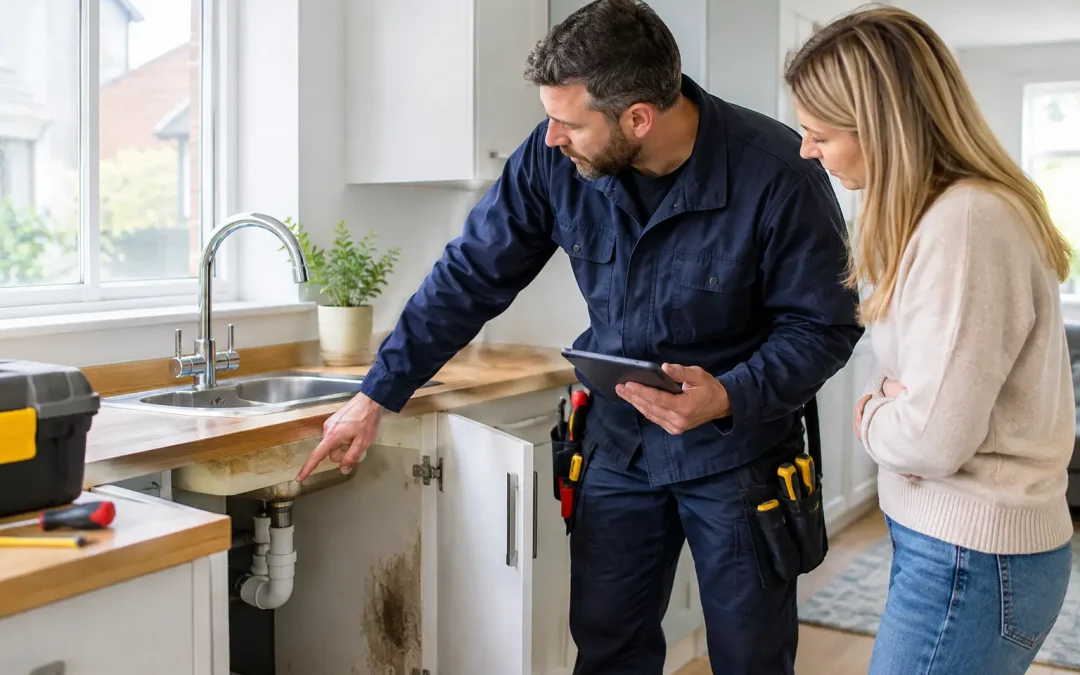
A tenant reports water staining on the ceiling on a Friday afternoon. The question is not simply who can attend the property. It is whether the issue is covered by the tenancy, how quickly it needs investigating, whether another flat is affected and how access will be arranged. Understanding what repairs are landlord responsibilities helps landlords and letting agents act promptly, protect the property and keep communication clear.
For rental homes in England, a landlord’s core repairing duties are set out in legislation, particularly Section 11 of the Landlord and Tenant Act 1985. The tenancy agreement can add further responsibilities, but it cannot remove the landlord’s basic legal obligations. Every property and report has its own facts, so practical judgement still matters.
What repairs are landlord responsibilities?
In broad terms, landlords are responsible for keeping the structure and exterior of the property in repair, as well as maintaining key installations that provide essential services. This applies whether the property is a house, flat or shared rental home.
The main areas usually include:
- The structure and exterior, such as walls, roofs, windows, external doors, chimneys, gutters and drains.
- Water and sanitation installations, including pipework, sinks, basins, baths, toilets and showers.
- Fixed installations for electricity and heating, where repair duties apply.
- Communal areas and shared systems where the landlord has responsibility for them.
In practice, this can cover a leaking roof, damaged guttering, water escaping from a pipe, a faulty toilet flush, deteriorating brickwork, a broken external lock or a failed radiator. The duty is to repair after the landlord has been made aware of the problem and has had a reasonable opportunity to put it right.
What is reasonable depends on the defect. A persistent leak, insecure external door or loss of a basic washing facility normally needs quicker attention than a small crack in plaster or a decorative issue. Prompt investigation is usually the sensible first step, even if the full repair needs materials, access arrangements or more than one trade.
Repairs to the property structure and exterior
Structural and exterior repairs are among the clearest landlord responsibilities. A tenant should not be expected to repair loose roof tiles, cracked render, failing pointing, defective guttering or a damaged fence where the fence is the landlord’s responsibility.
Small external faults can become expensive if they are left. A blocked gutter may lead to overflowing water, damp patches and damaged finishes. A loose tile can allow water into a roof space. Failed sealant around a window may look minor but can contribute to draughts and moisture penetration.
This is why planned inspections and a clear process for tenant reports are useful. The purpose is not to treat every mark or defect as a major project. It is to identify which issues need immediate action and which can be scheduled before they develop into wider property repairs.
In flats, responsibility can be more complicated. The landlord may be responsible for the internal property, while the freeholder or managing agent controls the roof, external walls or communal drainage. Tenants should still report the problem to their landlord or letting agent. The landlord can then pursue the appropriate party rather than leaving the tenant to work out the building’s management arrangements.
Plumbing, bathrooms and water damage
Plumbing repairs are a frequent source of tenancy disputes because a small leak can be hidden for some time. Landlords are generally responsible for maintaining the fixed water supply and sanitation systems. That commonly includes leaks from fixed pipework, toilet faults, defective taps, shower problems and issues with baths or basins.
There is an important distinction between a genuine fault and accidental damage or misuse. If a toilet is damaged through clear tenant misuse, the cost may be recoverable from the tenant. If the flush mechanism fails through age or ordinary use, it will usually be a landlord maintenance matter. The same principle applies to a shower screen, taps and waste pipes.
Water damage should be treated as an investigation, not just a cosmetic repair. Decorating over a stain without finding the source risks repeat damage and a frustrated tenant. An organised repair plan may involve tracing the leak, making the plumbing repair, allowing the area to dry and then completing plastering or decorating work where required.
Damp, mould and condensation: where responsibility can overlap
Damp and mould require a measured approach. A landlord may be responsible where the cause is a building defect, such as a leaking roof, defective guttering, failed pipework, poor drainage or inadequate ventilation. The property must also be kept in a condition that is fit for habitation.
However, condensation can be influenced by how the home is occupied, particularly where ventilation is not used or clothes are regularly dried indoors without suitable airflow. That does not mean a report can be dismissed as “tenant lifestyle”. The cause should be assessed properly. A practical response may include repairing defects, improving extraction, providing clear information to the tenant and monitoring whether the problem returns.
Good records matter here. Photographs, dates of reports, inspection notes and confirmation of completed work provide a clearer picture for everyone involved.
Appliances, fixtures and decorative condition
Landlord responsibilities are not limited to the legal minimum. If an item is supplied as part of the tenancy, the agreement and inventory will help establish who is expected to maintain it. A landlord-supplied cooker, fridge, washing machine, blind or fitted cupboard may need repair or replacement if it fails through normal use, even where it is not part of the core statutory repairing duty.
Decoration is more dependent on the condition at the start of the tenancy and the nature of the problem. Landlords are not normally required to redecorate simply because a tenant would prefer a different colour. But decorating may be necessary after a leak repair, damp treatment, damaged plasterwork or fair wear and tear between tenancies.
For landlords preparing a void property, it can be more efficient to combine outstanding repairs with painting, joinery adjustments, bathroom improvements or kitchen repairs. Coordinating work together reduces repeated access visits and helps return the property to a lettable standard with fewer loose ends.
What tenants are usually responsible for
Tenants should keep the property reasonably clean, use it in a tenant-like manner and report defects as soon as they become apparent. They are generally responsible for damage caused by themselves, household members or visitors, beyond reasonable wear and tear.
They should not attempt repairs that could make the problem worse. For example, covering a water stain, forcing a damaged lock or applying sealant over a leak can conceal the cause and delay the proper repair. A clear report with photographs, where possible, gives the landlord or managing agent a better starting point.
Tenants also need to provide reasonable access for inspections and repairs when proper notice has been given, except where urgent circumstances justify faster action. Access is often the practical obstacle that delays landlord maintenance, particularly in occupied properties with work commitments or vulnerable occupants. Respectful communication and agreed appointment windows make a significant difference.
A practical process for landlord maintenance
The strongest maintenance process is simple: log the report, assess urgency, arrange access, confirm the scope, complete the work and keep a record of the outcome. For a straightforward tap repair, that may be completed in one visit. For water damage or a roof issue, the process may need several stages and more than one trade.
Letting agents and property managers benefit from having one point of responsibility for this coordination. Instead of separately chasing a plumber, plasterer, decorator and roofer, an organised property maintenance company can manage scheduling, tenant contact, quotations, photographic updates and invoicing through one office-supported process.
For landlords across Loughborough and the surrounding East Midlands, Southdown Group can coordinate individual rental property repairs as well as larger void refurbishments and renovation work. This is particularly useful where a repair uncovers related issues that need to be resolved before decoration or reletting can proceed.
When a repair becomes a refurbishment decision
A repair is not always the best long-term answer. Repeated shower leaks, deteriorated bathroom finishes, damaged kitchen units or ongoing water ingress may point to a wider refurbishment need. The decision depends on the age of the installation, the frequency of previous repairs, the expected tenancy demand and the likely cost of doing the work twice.
There is a balance to strike. Replacing everything at the first sign of a fault is rarely necessary, but repeated patch repairs can disrupt tenants and create more administration than a planned improvement. A clear quotation that separates essential repairs from recommended upgrades allows the landlord to make an informed decision.
A well-managed repair does more than resolve one reported issue. It protects the asset, gives tenants confidence that concerns are taken seriously and creates a clearer record for the next inspection, renewal or change of tenancy.