
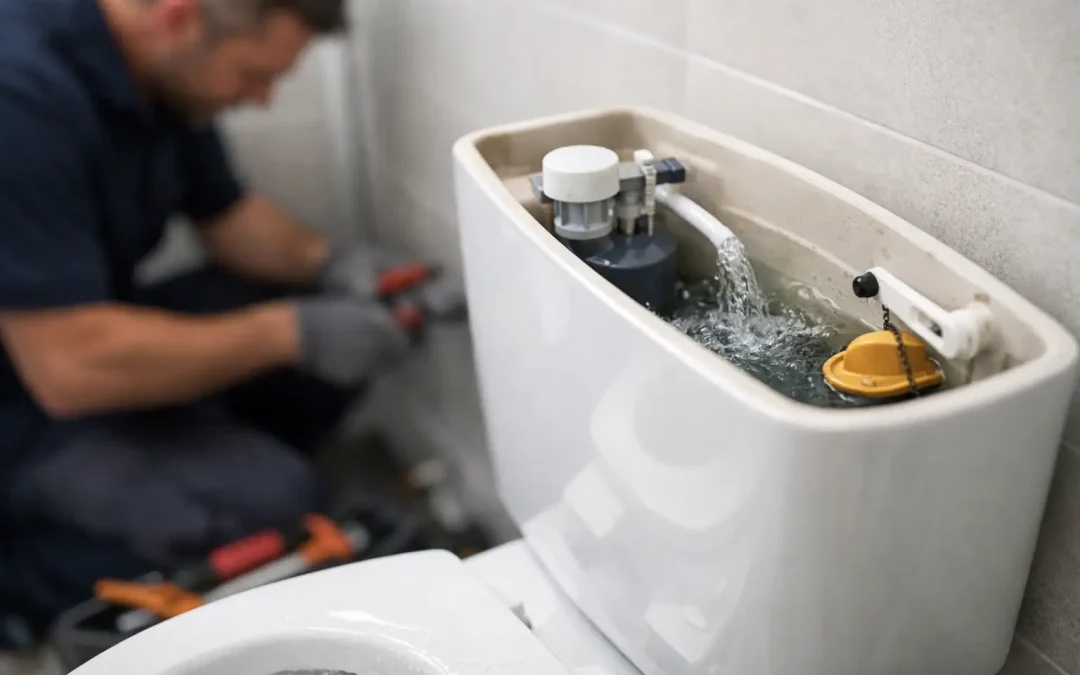
A running toilet can be easy to ignore at first: a faint hiss after flushing, or water moving into the bowl every few minutes. But if you are asking, “why is my toilet constantly running?”, it is worth dealing with promptly. The fault can waste a surprising amount of water, increase bills and, in a rental property, become an avoidable source of tenant frustration.
Most running toilets have a straightforward cause inside the cistern. The challenge is identifying whether it is a small adjustment, a worn component or a fault that needs a professional toilet repair. A clear diagnosis also matters because continually adjusting parts without finding the cause can make the problem worse.
Why is my toilet constantly running after flushing?
A toilet should refill after it is flushed, then stop once the cistern has reached the correct water level. If it keeps running, water is either escaping from the cistern into the pan or the filling mechanism is continuing to add water when it should have shut off.
In modern toilets, you may not hear a dramatic rush of water. Instead, look for a slight ripple in the bowl, a steady trickle down the back of the pan, or water entering the overflow. Older toilet systems can also make a noticeable whistling, hissing or vibrating sound while they continue to fill.
The most common reasons are a leaking flush valve, a faulty fill valve, an incorrectly set float, or a problem with the flush button or handle mechanism. Limescale and general wear are frequent contributors, particularly where internal parts have been in place for several years.
The flush valve seal is worn or dirty
The flush valve is the component that opens to release water into the bowl when you flush. When the flush cycle ends, its seal should sit firmly against the outlet at the base of the cistern. If the seal is worn, misshapen, coated in debris or affected by limescale, water can continue to pass into the pan.
This is one of the most common causes of a toilet that appears to refill at random. Water slowly leaks from the cistern, the water level falls, and the fill valve starts again to replace it. The cycle can continue all day and night.
A useful check is to add a small amount of food colouring to the cistern water, without flushing. If colour appears in the bowl after 15 to 30 minutes, water is passing through the flush valve. Avoid using harsh chemical cleaners inside the cistern, as these can damage seals and plastic components.
The fill valve is not shutting off
The fill valve controls the water entering the cistern after flushing. Once the correct level is reached, it should shut off completely. If it is faulty or obstructed, it may keep allowing water in and send excess water through the overflow.
You may see water flowing into the internal overflow tube, or notice a constant filling sound even when the toilet has not been used. The cause can be a worn diaphragm, a sticking valve, a damaged internal washer or sediment affecting the mechanism.
Some fill valves can be adjusted, but an adjustment will not solve a component that has reached the end of its working life. Replacing the valve is often the more reliable repair, especially if the toilet has been repeatedly overfilling.
The float is set too high or is sticking
The float rises with the water level and tells the fill valve when to stop. Depending on the toilet, it may be a traditional ball float on an arm or a compact float built into the fill valve assembly.
If the float is set too high, the cistern will overfill and water will run into the overflow. If it sticks, catches against another part or has become waterlogged, it may not rise properly. A minor setting issue can sometimes be corrected, but a float that is damaged or repeatedly sticking normally needs attention.
The flush button, handle or cable is holding the valve open
A flush button that sticks, a handle that does not return fully or a poorly adjusted cable can prevent the flush valve from seating correctly. This is particularly common with dual-flush toilets, where the button mechanism sits in the cistern lid and may be overtightened or out of position.
If the problem starts immediately after fitting a new flush button, replacing a lid or carrying out another repair, the mechanism may simply need setting up correctly. If it has developed gradually, worn parts are more likely.
Checks you can make before booking a toilet repair
You do not need to dismantle the cistern to gather useful information. First, remove the cistern lid carefully if it is safe to do so. Some push-button lids need to be released in a particular way, so do not force them. Flush the toilet and watch what happens as it refills.
Check whether water is entering the overflow, whether the fill valve continues running once the water level is reached, and whether water is visibly tracking into the bowl after the fill cycle has ended. Also press the flush button or handle a few times to see whether it returns freely.
If water is overflowing externally, leaking from the base of the toilet, or appearing on the floor around the cistern, turn off the local isolation valve if you can do so safely. This is usually located on the water pipe feeding the toilet. If there is no accessible isolation valve, avoid repeated flushing and arrange plumbing assistance. A leak outside the toilet can damage flooring, ceilings below and surrounding finishes.
For landlords and letting agents, it helps to ask the tenant for a short video showing the inside of the cistern after flushing, along with photos of any external leak. This can help establish the likely fault before a visit and makes access, quotation and repair arrangements more efficient.
When a running toilet needs a professional plumber
A toilet repair is usually a modest job when dealt with early, but the correct parts and fitting method depend on the cistern design. Concealed cisterns, close-coupled toilets, older systems and dual-flush mechanisms can all require different components. Parts that look similar are not always interchangeable.
Professional help is sensible when the fault is ongoing, the cistern is difficult to access, parts have already been adjusted without success, or there is any sign of a leak outside the pan. It is also the right approach where a tenant has reported a persistent issue and the repair needs to be recorded, organised and completed with minimal disruption.
A plumber can identify whether the issue is the fill valve, flush valve, seal, float or flush mechanism, then fit compatible replacement parts and test the toilet properly. The work should include checking for correct filling, reliable flushing and no continuing trickle into the bowl.
Southdown Group supports homeowners, landlords and managing agents across Loughborough and the surrounding area with practical toilet repairs and wider plumbing maintenance. Clear fault information, suitable access arrangements and prompt updates help keep small plumbing issues from becoming larger property maintenance problems.
Do not leave the problem to settle on its own
A running toilet rarely corrects itself. The noise may come and go, particularly when a slow leak causes the cistern to refill every so often, but the underlying seal or valve issue remains. Over time, wasted water adds up and a failing part can eventually stop the toilet from flushing correctly altogether.
If the toilet is running continuously, make a note of what you can see and hear, limit unnecessary flushing and arrange a repair before it becomes more disruptive. A properly repaired cistern should fill smoothly, stop at the right level and stay quiet until the next flush.