
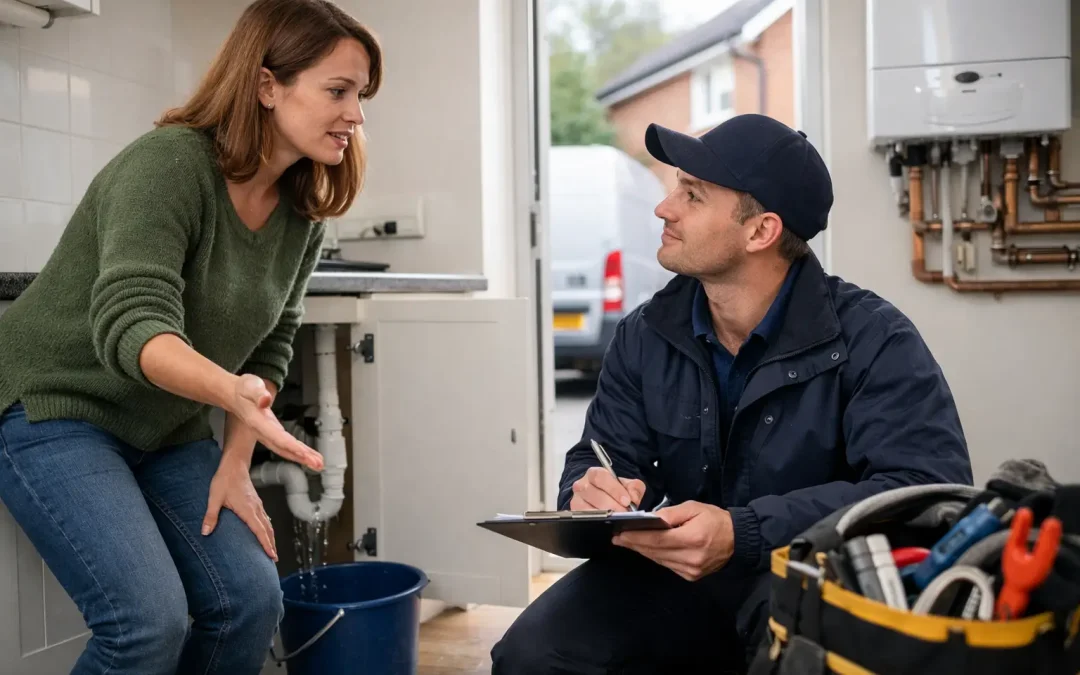
A tenant says the toilet is leaking, but by the time the message reaches the landlord or agent, the key details are missing. Nobody knows whether the leak is constant, whether water is damaging the floor, or whether access is available tomorrow. That is usually where delays begin. If you want to know how to report tenant plumbing issues properly, the aim is simple – pass on enough clear information for the right contractor to assess urgency, plan the visit and get the repair sorted without unnecessary back and forth.
For landlords, letting agents and property managers, poor reporting creates extra admin. For tenants, it often means a longer wait. A good report does not need to be technical. It just needs to be accurate, practical and organised.
Why clear reporting matters
Plumbing problems vary a lot in urgency. A dripping kitchen tap is inconvenient. A leaking toilet waste, a failed stop tap, a cold property with no heating, or water coming through a ceiling can become more serious very quickly. When the first report is vague, the next step is usually more phone calls, more messages and more delay.
A clear report helps the contractor decide whether the issue needs a fast attendance, whether parts may be required, and whether another trade may also need to be involved if there is damage to walls, ceilings or flooring. It also helps landlords and agents keep a proper record of what was reported and when.
This matters even more in tenanted property, where access has to be arranged around the occupier, the managing agent and the contractor. Good information at the start saves time for everyone.
How to report tenant plumbing issues step by step
The best approach is to keep the report simple but complete. Start with the exact problem, then add the details that affect urgency, access and likely cause.
Say what the problem is and where it is
The first line should identify the issue and its location in the property. “Leak under kitchen sink” is far more useful than “plumbing problem”. “Toilet not flushing in upstairs bathroom” is clearer than “bathroom issue”.
If there is more than one affected area, say so. For example, if the tenant reports low pressure at all taps, or if the shower is leaking and water is appearing on the ceiling below, that should be included straight away.
Explain what is happening now
A useful report describes the current symptoms rather than guessing the repair. Tenants do not need to diagnose the fault, and neither should agents unless they are certain. It is better to say “water is dripping steadily from the pipework under the basin when the tap runs” than “the seal has failed”.
Include whether the issue is constant or intermittent. A radiator that is cold all day is different from one that heats at the top but stays cold at the bottom. A toilet that occasionally keeps running needs different attention from one that overflows after every flush.
State whether water, heating or sanitation is affected
This is one of the most useful parts of the report. Make it clear whether the tenant still has usable water, a working toilet, hot water and heating. A property with one faulty tap is manageable. A property with no hot water, no heating or no working WC is a priority.
If the problem is causing active leakage or risk of damage, say where the water is going. Is it contained in a bowl under the sink, or spreading across flooring? Is it dripping into a cupboard, running through a ceiling, or affecting electrics? Those details change the response.
Add photos and short videos if available
Photos help far more than long explanations. A clear image of a leak under a sink, staining around a ceiling, a broken flush button or water around the base of a toilet can speed up the process considerably. A short video can also help if the issue only shows when a tap, shower or flush is in use.
The key is relevance. One or two clear photos are usually enough. Ten blurry images from different angles often create more confusion than clarity.
Include access information early
In rental property, repairs are often delayed not by the diagnosis but by access. A good report should say whether the tenant is available, what times they can do, whether keys are held by the agent, and whether pets or other access restrictions need to be considered.
If the tenant is reporting the issue directly to the landlord or managing agent, they should also say whether someone over 18 can be present if needed. If there are any concerns about entry to certain parts of the property, it is better to mention them before the visit is booked.
What tenants should include in a plumbing report
A practical tenant report usually works best when it covers six things: what the issue is, where it is, when it started, whether it is getting worse, whether water or heating is affected, and what access is available. That gives a contractor enough to make an informed first decision.
It also helps if the tenant confirms any immediate actions already taken. For example, if they have turned off the local isolation valve under a basin, shut off the mains water, or stopped using the shower because of a leak, that is useful to know. If they do not know how to isolate the issue safely, they should say that rather than guess.
Tenants should avoid minimising or exaggerating the problem. Saying “tiny leak” when water has already damaged a cupboard is not helpful. Equally, every dripping tap is not an emergency. Clear, factual reporting is the best route.
What landlords and agents should ask before sending a contractor
When a tenant report is incomplete, landlords and agents can tighten it up with a few straightforward questions. Ask exactly where the issue is, whether it is ongoing, whether any part of the plumbing or heating system is unusable, whether there is visible water damage, and whether photos can be sent.
It is also sensible to ask whether the issue has happened before. Repeated toilet fill valve faults, recurring shower leaks or ongoing pressure issues can point to a longer-term problem rather than a one-off failure. That affects whether the contractor attends just to patch the symptom or investigates the wider cause.
For managed property, keeping these reports consistent helps with quotations, approval records and end-to-end communication. A dependable contractor will usually be able to work more efficiently when those details are in place from the start.
Common reporting mistakes that slow repairs down
One common mistake is using broad wording such as “plumbing broken” or “boiler issue” without any further detail. Another is reporting the result but not the source, such as saying “carpet wet” without mentioning that the bathroom above has a shower leak.
Delayed photo evidence is another issue. If a landlord or agent has to request images after the first call, that adds time. The same applies when access is not discussed until after the job has been assessed.
There is also the question of urgency. Not every repair needs the same response time. A slow drip from a tap may be booked in routinely. A leak affecting electrics, a failed water supply, or no heating and hot water in colder weather may need much faster attention. Good reporting helps everyone judge that properly.
When a plumbing issue may involve heating or gas too
Some tenant reports start as a plumbing issue but quickly overlap with heating or gas services. Low boiler pressure, no hot water, leaking radiator valves, or water escaping near the boiler all need careful handling. In those cases, the report should say exactly what the tenant has noticed, without attempting any unsafe diagnosis.
If the tenant smells gas, that should be treated differently from a general plumbing fault and handled through the correct emergency process first. Beyond that, landlords should make sure the report is passed to a qualified contractor who deals with plumbing, heating and gas work in a joined-up way. That avoids one issue being logged while the related fault is missed.
A simple example of how to report tenant plumbing issues
A useful report might read like this: “There is a leak under the kitchen sink at 14 Meadow Road. It happens whenever the right-hand tap is run and has started soaking the cupboard base. The tenant noticed it yesterday evening and says it is getting worse. Cold water still works elsewhere in the property. Photos attached. Access is available tomorrow between 9am and 1pm, and the tenant can be present.”
That short message gives the landlord, letting agent or contractor something workable straight away. It identifies the issue, location, timing, impact, evidence and access in a few lines.
For landlords and agents across Loughborough and the surrounding area, the most effective repair process usually starts long before the plumber arrives. It starts with a report that is clear enough to act on. When the right details are passed on early, the job is easier to schedule, easier to diagnose and more likely to be resolved without extra chasing.