
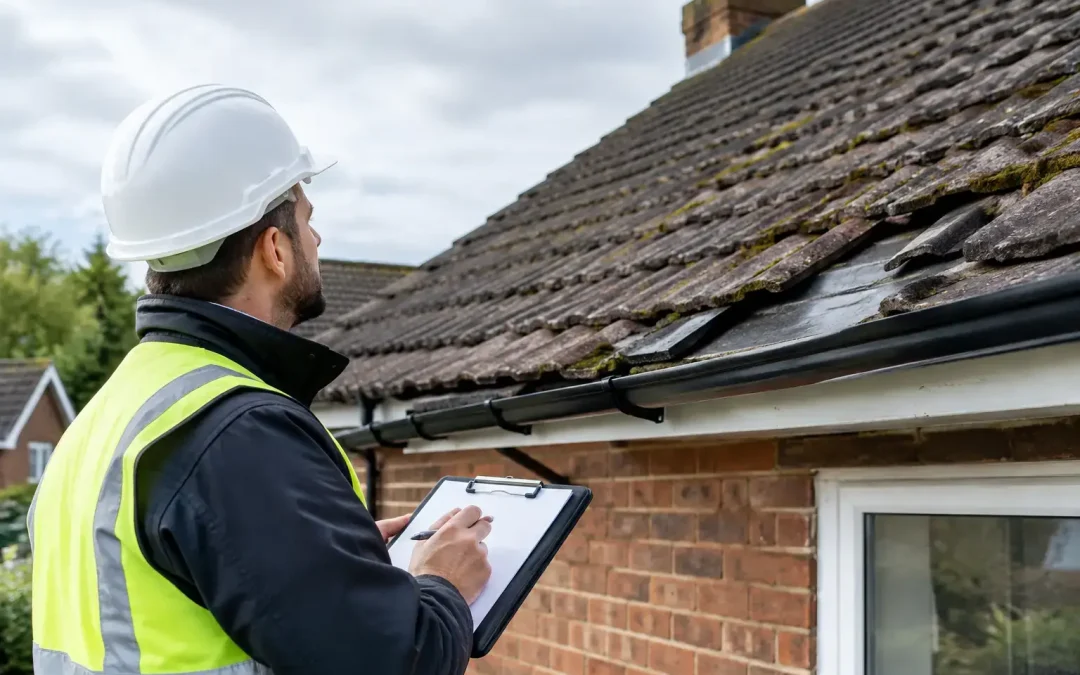
A small brown mark on an upstairs ceiling, a loose tile after high winds or water running where it should not can all point to a roofing issue. The difficulty is that the visible problem is not always where the water is entering. To assess roof damage properly, look at the whole picture: the roof covering, gutters, flashings, interior signs of moisture and the recent weather or maintenance history.
For homeowners, early assessment can prevent a manageable repair becoming damage to ceilings, insulation, timber or decoration. For landlords and letting agents, a clear process also helps protect the property, respond appropriately to tenants and keep a reliable record of the work needed.
Start with a safe, ground-level inspection
Roof work carries obvious risks, so a first inspection should normally be completed from ground level, from an upstairs window where safe, or with photographs taken by a qualified contractor. Avoid climbing onto a roof, leaning ladders against gutters or walking on tiles to investigate a suspected fault. A cracked tile can give way, and even a sound-looking roof may be slippery or structurally compromised.
Walk around the property in daylight and look for changes rather than trying to diagnose every detail. Missing, slipped or cracked tiles and slates are common warning signs. So are sagging areas, uneven roof lines, damaged ridge tiles, loose flashing around chimneys and roof valleys that appear blocked with moss or debris.
Binoculars can help you inspect from a distance, but they will not show every defect. Their purpose is to identify whether a professional roof inspection should be arranged, not to confirm that the roof is watertight.
Signs indoors that may indicate roof damage
The inside of a property often provides the first useful clue. Check loft spaces where accessible and safe, particularly after prolonged rain. Damp insulation, water staining on rafters, a musty smell or daylight visible through the roof structure should be reported promptly. Do not disturb wet electrical fittings or move materials that may be supporting damaged sections.
Within living areas, look for yellow or brown ceiling stains, bubbling paint, peeling wallpaper and damp patches at the top of external walls. A stain does not necessarily mean there is an active leak at that moment. It may be historic, particularly in a property where repairs have already been carried out. However, fresh discolouration, soft plaster or a patch that grows after rain requires further investigation.
The location can be misleading. Water can travel along timbers, roof membranes and internal surfaces before it becomes visible. A ceiling mark near a chimney, for example, could relate to flashing, brickwork, a valley, a blocked gutter or condensation in the loft. This is why a proper assessment should consider connected parts of the building rather than replacing the nearest tile and hoping for the best.
Check gutters, valleys and roof edges
Not every apparent roof leak starts with the roof covering. Gutters and downpipes are designed to direct rainwater away from the building. When they overflow, water can run behind gutters, soak fascia boards, track down walls and enter vulnerable joints.
From the ground, look for gutters that are sagging, visibly blocked, overflowing in rain or detached from their brackets. Green staining on walls, damp around window heads and water pouring over a gutter edge are all signs that cleaning, repair or realignment may be required. Downpipes should be connected securely and discharge water away from the property rather than against the base of an external wall.
Roof valleys deserve particular attention because they handle a large volume of water. Leaves, moss and debris can restrict flow, especially on properties near mature trees. Valley linings can also deteriorate over time. A contractor can inspect these areas safely and determine whether clearing, local repairs or more extensive work is appropriate.
Consider the weather and the building’s history
A useful roof assessment includes context. Note when the issue was first noticed and whether it follows driving rain, high winds, snow, a period of freezing weather or ongoing rainfall. Wind-related damage may be easier to identify after a storm, while slow leaks can remain hidden until insulation becomes saturated or internal finishes begin to show staining.
The age and type of roof matter too. A single slipped tile on an otherwise well-maintained roof may need a local repair. Widespread cracked tiles, failing mortar, deteriorated felt or recurring leaks may point to a broader maintenance requirement. Flat roofs require a different assessment from pitched roofs, with attention to splits, ponding water, lifted edges and failed joints.
For rental properties, previous maintenance records can be particularly helpful. They show whether the issue is new, recurring or connected to an earlier repair. They also make it easier for landlords and property managers to make informed decisions about repair scope and future planned maintenance.
When a local repair is enough – and when it is not
The right solution depends on the cause and condition of the roof. Replacing a damaged tile, securing flashing or repairing a gutter can be effective when the rest of the roof is sound. Localised repairs are often the sensible option where damage is isolated and the underlying structure is dry and stable.
More extensive work may be needed if there is widespread wear, repeated water ingress, damaged roof timbers or several defects across the same roof area. It can be tempting to keep arranging small repairs, particularly on a rental property with competing maintenance demands. Yet repeated call-outs can become disruptive for tenants and may not address the underlying cause.
A clear quotation should explain what has been found, what repair is proposed and whether there are any associated works, such as plastering, decorating, brickwork or gutter repairs. Where the source of a leak is uncertain, a staged approach may be sensible: investigate safely, carry out targeted repairs, then monitor or complete internal reinstatement once the area has dried.
How landlords and letting agents can manage roof issues well
Roof damage can quickly become an operational issue as well as a building repair. Tenants need clear communication, access arrangements must be organised and a record of the reported issue should be kept. Ask occupants to provide photographs of internal staining or water ingress where possible, along with the date it was first noticed and whether it worsens during rainfall.
Avoid asking tenants to inspect roofs, clear high-level gutters or place themselves at risk. Their role is to report symptoms promptly and provide access when agreed. The contractor’s role is to assess the condition safely, identify the likely cause and coordinate the required trade work.
An office-supported contractor can reduce the administration involved. Southdown Group can arrange appointments, communicate with occupants, coordinate roofing and related property maintenance work, and provide photographic updates and completion information. This is especially useful when a repair involves more than one trade, such as roof repairs followed by plastering and redecoration.
What to record before arranging an inspection
Good information helps a contractor attend prepared and makes diagnosis more efficient. Record the affected room or area, the date the problem appeared, recent weather conditions and whether water is actively entering the property. Take clear photographs from ground level and of any indoor staining, without putting yourself at risk.
Also note whether the property has recently had gutter cleaning, roof repairs, loft insulation work or building work around chimneys, dormers or extensions. These details do not replace an inspection, but they can help narrow down likely causes.
If water is entering the property, protect furnishings where safe to do so and keep people away from affected electrical items. Do not attempt temporary roof repairs from a ladder or roof surface. Prompt professional assessment is the safer route and gives you a clearer basis for deciding what needs to happen next.
A roof rarely fails without leaving clues. Acting when those clues first appear gives homeowners, landlords and property managers more control over the repair, the budget and the disruption to the property.