
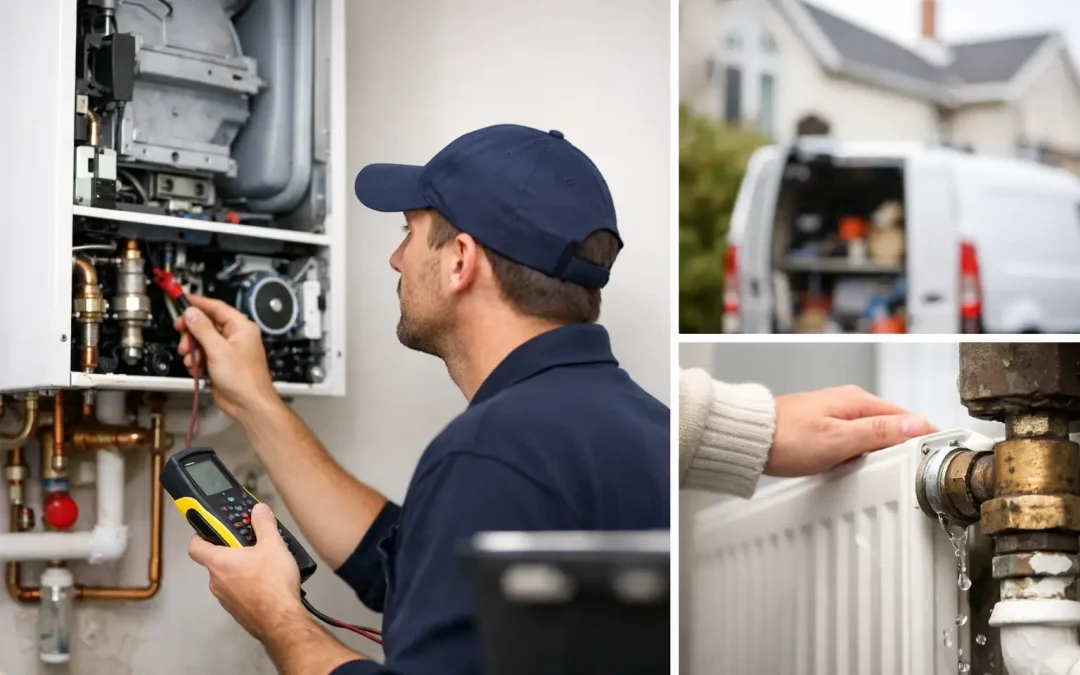
A boiler rarely fails without giving some indication that something is wrong. A tenant reporting lukewarm radiators, a homeowner repeatedly topping up system pressure, or a boiler making a new noise can all be early boiler breakdown warning signs. Acting at this stage can often prevent a complete loss of heating or hot water and may limit the disruption to the property.
For landlords and letting agents, early reporting matters just as much as early repair. A clear description of the issue, access arrangements and any photos of the boiler display can help a heating engineer assess the problem more efficiently and keep tenants informed.
Boiler breakdown warning signs to look out for
Not every change means the boiler is about to stop working. Some issues are seasonal, such as radiators taking longer to warm up after months of little use. However, a fault that repeats, worsens or affects heating and hot water should not be ignored.
1. The boiler keeps losing pressure
Most sealed heating systems need sufficient pressure to operate properly. If the pressure gauge regularly drops into the low range, the boiler may stop or display a fault code. Repressurising can restore operation temporarily, but it is not a long-term answer where the pressure continues to fall.
The cause could be a small leak on the heating system, a faulty pressure relief valve, an issue with the expansion vessel or another component within the boiler. Check for visible drips around radiators, pipework and the boiler, but avoid removing the boiler casing or attempting to repair internal parts. Repeated pressure loss is a sensible reason to arrange a professional inspection.
2. Strange noises during operation
Boilers are not silent, but new or noticeably louder sounds deserve attention. Banging, kettling, whistling, gurgling or vibrating can point to trapped air, restricted water flow, limescale build-up, a pump issue or a problem elsewhere in the heating system.
The timing of the noise helps. A sound that occurs only when the heating starts may have a different cause from one heard whenever hot water is run. Make a note of when it happens and whether radiators, taps or the boiler itself are affected. This gives the engineer more useful information than simply reporting a noisy boiler.
3. Heating or hot water is unreliable
A boiler that works intermittently is often at risk of a more complete breakdown. You might notice that hot water runs hot and cold, the heating comes on only sometimes, or the boiler needs to be reset repeatedly. A digital display may also show an error code.
There are several possible causes, including a faulty sensor, ignition problem, pump fault, frozen condensate pipe in cold weather or a controls issue. The correct repair depends on the appliance and the fault found, so it is better to have the boiler diagnosed than repeatedly resetting it and hoping it holds.
4. Radiators have cold patches or rooms will not warm up
Cold areas at the top or bottom of a radiator, several radiators that remain cool, or rooms that no longer reach a comfortable temperature can indicate a circulation issue. Sometimes the problem lies with the radiator or heating controls rather than the boiler itself, but it can still place additional strain on the system.
A single cold radiator may need attention locally. If the issue affects several rooms, the system may require investigation for sludge, air, a pump problem, poor balancing or a boiler fault. For rental properties, it is useful to establish whether the problem affects the whole home or only particular rooms before arranging a visit.
5. Water is leaking from the boiler or nearby pipework
Even a small amount of water around a boiler should be checked. It may come from a loose fitting, a valve, condensate pipework or an internal component. Left unresolved, a leak can damage surrounding finishes, affect boiler pressure and lead to a more expensive repair.
Do not assume that a drip is harmless because the heating still works. Photograph the area if practical, note whether the water is constant or only appears when the system runs, and arrange for a qualified engineer to investigate. If water is close to electrical controls, avoid touching the appliance.
6. The pilot light or flame behaviour has changed
On older boilers with a visible pilot light, a pilot that repeatedly goes out is a clear warning sign. If a flame is visible through an inspection window, it should generally appear blue. A yellow or orange flame, soot marks or black staining around the appliance should be treated seriously, as these can indicate incomplete combustion.
If you suspect a gas or carbon monoxide issue, do not wait for a routine appointment. Get fresh air, avoid using electrical switches or naked flames, and contact the National Gas Emergency Service on 0800 111 999 if you can smell gas. Carbon monoxide alarms sounding, headaches, dizziness or nausea when the boiler is in use also need immediate action. Any gas appliance concern should be checked by a Gas Safe registered engineer.
7. Higher energy use with no clear explanation
A noticeable rise in gas use can have simple causes, particularly during a cold spell or when occupancy changes. But if the property is being heated in the same way and bills have risen sharply, the boiler or wider heating system may be operating inefficiently.
Poor performance can result from ageing parts, incorrect settings, circulation problems or lack of regular servicing. A service will not resolve every fault, but it gives an engineer the opportunity to inspect the boiler’s condition, test its safe operation and identify developing problems before they become urgent.
8. The boiler is overdue a service
A boiler may appear to work normally while parts are wearing or combustion performance has changed. Annual boiler servicing is a practical way to reduce the risk of unexpected faults, particularly before the colder months when heating systems are under more demand.
For landlords, an annual gas safety check and CP12 certificate are separate legal requirements from servicing, although both can often be arranged at the same time where appropriate. A gas safety check confirms the required safety checks have been completed on relevant appliances. A service focuses on the boiler’s maintenance and performance. One should not be assumed to replace the other.
What to do before booking a boiler repair
A few straightforward details can make the repair process smoother. Note the boiler make and model, any fault code shown, whether heating, hot water or both have failed, and when the issue first appeared. For a managed property, confirm tenant contact details, access availability and whether anyone vulnerable is affected by the loss of heat or hot water.
It is also helpful to explain what has already happened. For example, has the pressure been dropping for several weeks, has the boiler been reset, or did the problem begin after a power cut or cold weather? This is not about diagnosing the fault yourself. It allows the contractor to organise the visit properly and helps avoid unnecessary delays.
Avoid taking off boiler panels, working on gas connections or trying to repair internal components. Gas and boiler repairs require the right competence, testing equipment and safety checks. Where a boiler has locked out, there may be a simple cause, but there can also be a fault that needs professional attention.
When a repair may not be the best option
A boiler repair is often the right route, especially where the appliance is relatively modern and the fault is isolated. However, the decision depends on the boiler’s age, service history, availability of parts, condition of the wider system and the nature of the fault. An older boiler with repeated failures may need a more considered discussion than a newer appliance with a single failed component.
For landlords and property managers, reliability between tenancies and during winter can be as relevant as the immediate repair. Clear advice, a written quotation where further work is needed, and updates after the visit make it easier to decide what is proportionate for the property.
If you have noticed boiler breakdown warning signs at a home or rental property in Loughborough or the surrounding area, arranging an assessment before the problem worsens is usually the most practical next step. Southdown Group can help organise boiler repairs, servicing and gas safety work with clear communication for homeowners, tenants and property managers.